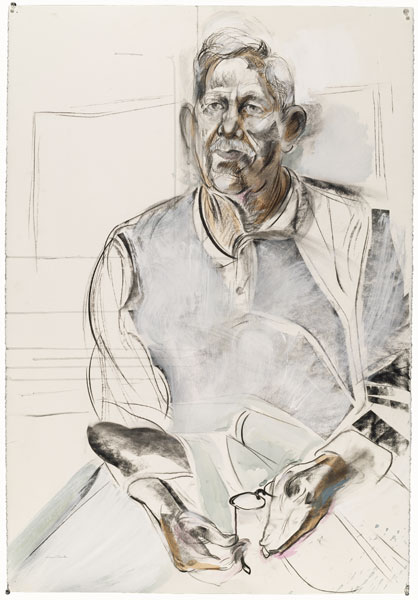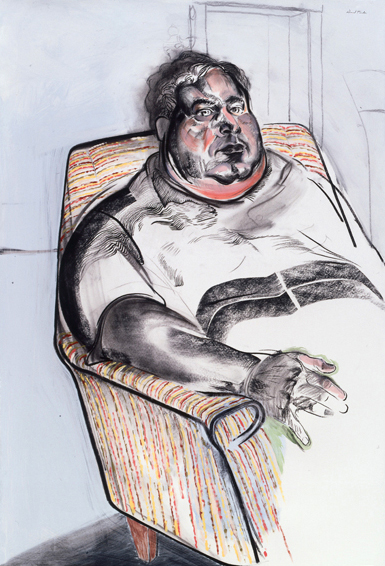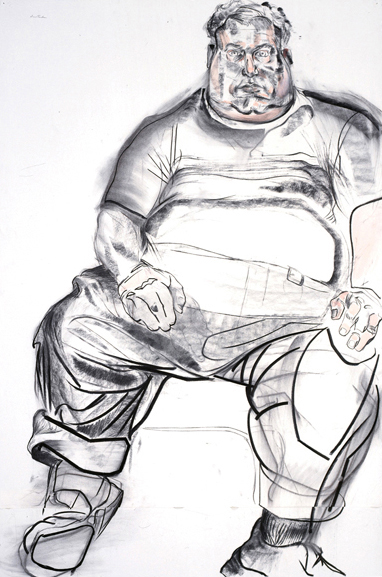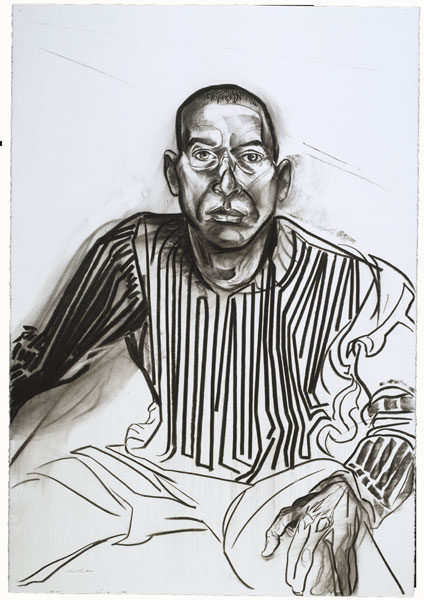
“Still Lives” by David Tomb
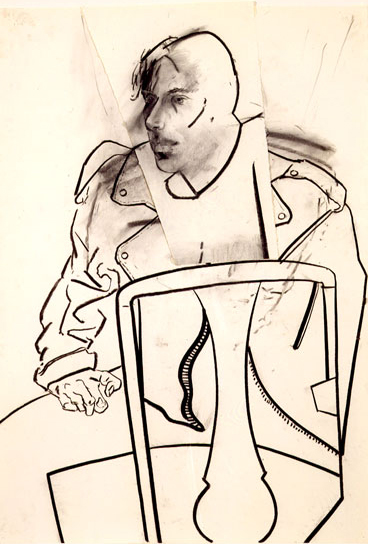
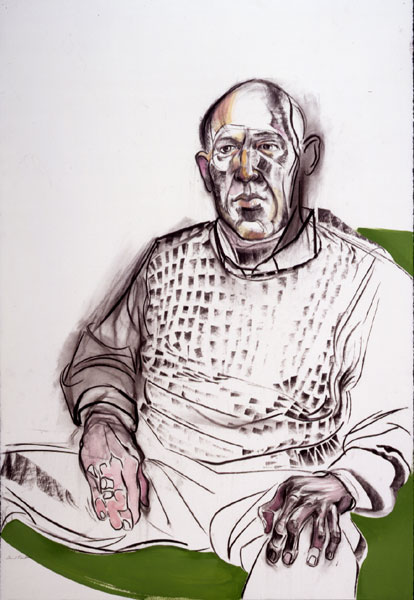
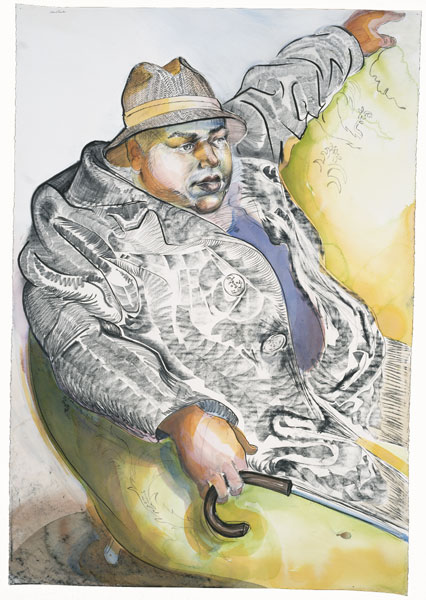
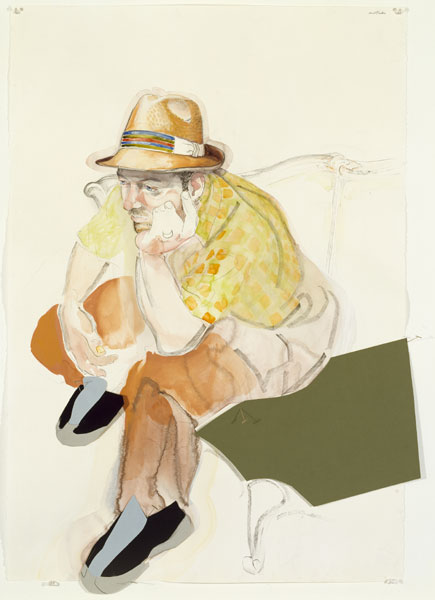
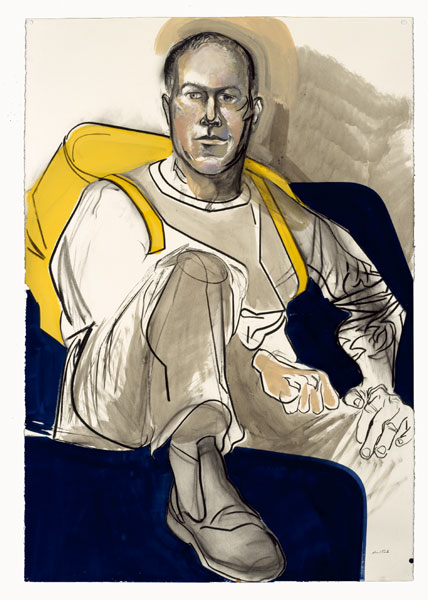
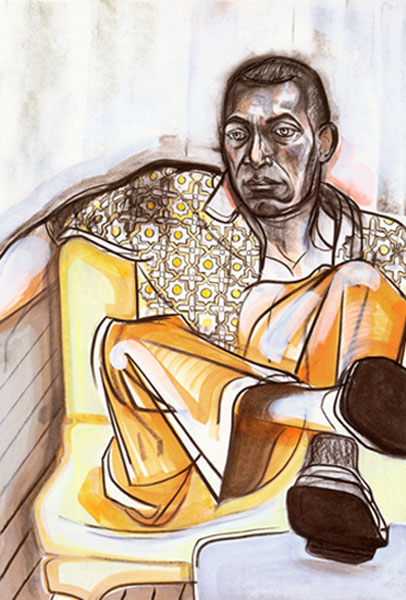
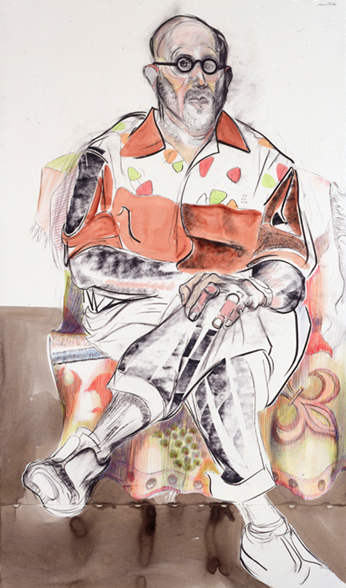
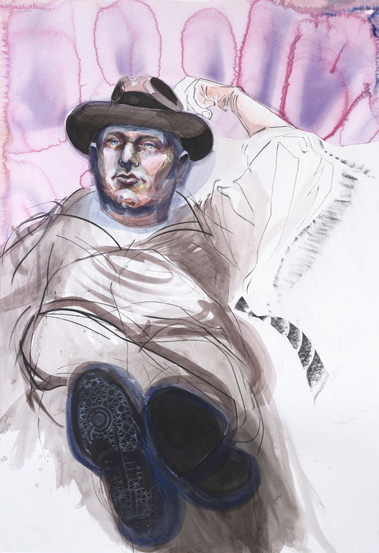
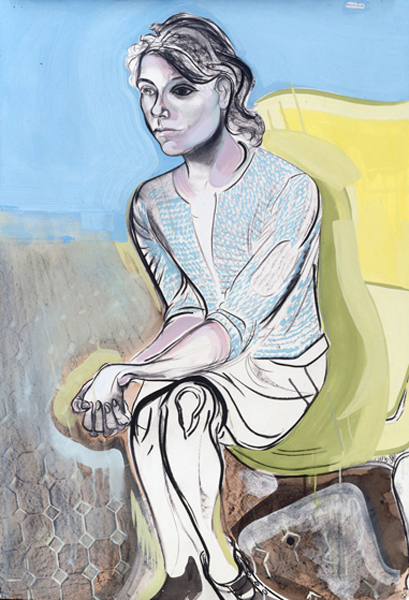
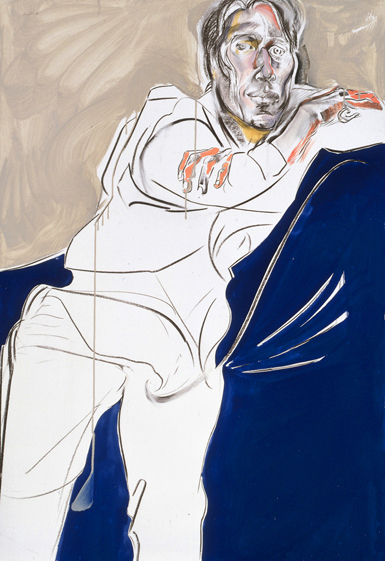
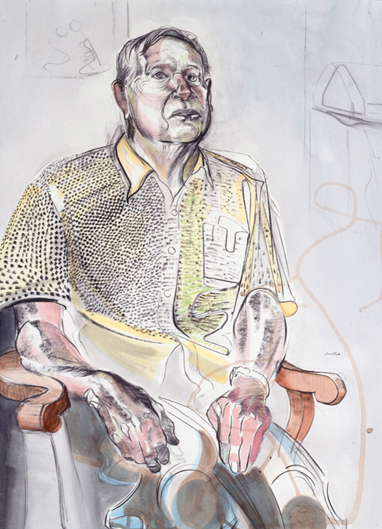
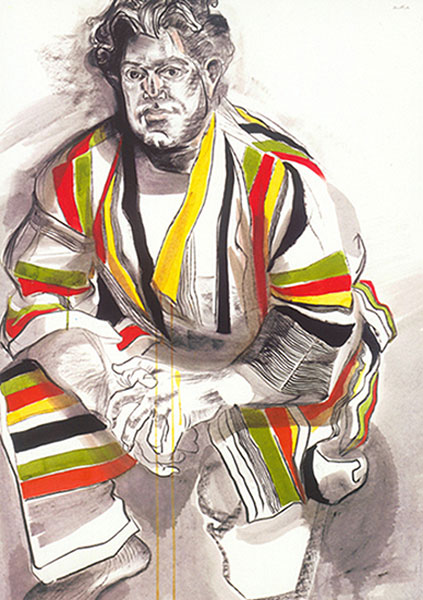
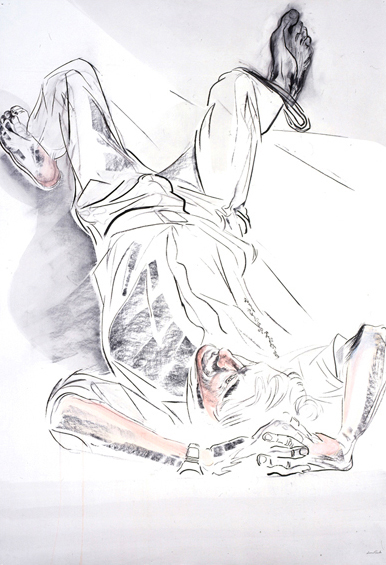
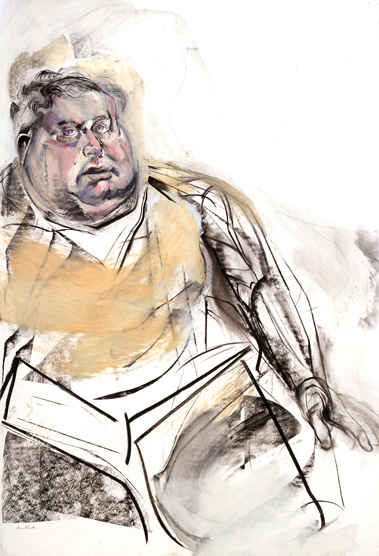
Although he has worked primarily as a portraitist for well over a decade, David Tomb has never accepted a commission. His subjects are friends, acquaintances and friends of friends, the people he encounters as he moves through life, faces marked by an intriguing peculiarity or some latent possibility. At the foundation of his practice, however, is a body of images of a man named Richard that were made between 1985 and 1991. This must be the starting point, this remarkable, provocative, often disturbing document comprised of hundreds of drawings and as many as fifty paintings: an arduous, exhausting exchange between artist and sitter, these two people who literally made the pictures. Although the images can also be described a residue of their mutual process, certain questions arise: How much can one person know of another, and how deeply? By what methods is knowledge persuasively documented? Can the artist’s scrutiny, bound to the brushstroke, the most traditional of portraiture’s means, claim their former authority? And, finally, what privilege should be granted to the portrait in a skeptical age in which most artists have turned their attention elsewhere? In the end, any discussion of the Richard series must respond to these questions, as well as those levels of knowledge, both definite and potential, available to description and some of the ways in which art might continue to broach this issue, which is by no means irrelevant to contemporary art. The artist, meanwhile, remains a fully active participant, always testing the breadth and depth of what he knows or is willing to consider. In the end, engagement is all.
Any single portrait of Richard is bound to the larger, more comprehensive story: and the series is the narrative of a patient, methodical operation of uncertain outcome, and in its entirety it may appear variously as document, diary, journal, history, exercise, essay, lyric, reverie, fantasy, or notation, always open-ended. It is one aspect of Tomb’s accomplishment that such a wide range of perspectives will fall so easily into place, operating with more or less equal efficiency. Portraiture and narrative merge, not as literal genres so much as ways of knowing, and thus the series separates itself from essentialist notions that governed portraiture for centuries. The story unfolds from among the many pictures of Richard, expanding outward from Tomb’s early drawings, tentative and presentational, to more contemporary procedures that rely upon strategies of repetition, continually varying changes in the artist’s vantage point, exploitation of the shifting moods of artist and subject alike, changes in setting, all taking place over a period of six years, time enough to confer a particular kind of history onto the series itself.
As the form most thoroughly bound to commodification and control of self-presentation by the subject, portraiture had the protection of stalwart tradition for a long time. Although assaults on the form have taken place during the past century, they have been inevitable, if subsidiary, campaigns in modernism’s larger struggle to overturn tradition-laden, historical forms. At the same time, portraiture has been put to other uses. As a system-based genre, it has a particularly strong appeal to artists interested in system-related issues. So it is that the innate conservatism of the form, with its iconic posturing, social connotations, its obsession with the verity of depiction and its thick history of self-presentation, has proved a significant resource for a large number of postwar artists, including Alice Neel, Alex Katz, Andy Warhol, Chuck Close, and Lucian Freud, among others. Tomb’s work with the form has been as thorough as any, and its richness of conception lies in his ability to steer so close to the traditional means of portraiture itself; thus he may alter our sense of the portrait without altering the bases of the genre. Portraiture’s historical subservience to pictorial accuracy, which reached an apotheosis during the eighteenth and early nineteenth century, required the “head” to bear a tremendous amount of cultural information, a condition that by now has transformed the portrait into a kind of proving ground. It tests virtually any idea applied to it. Tomb strives for convincing recollection of his subject, but in the end, his pictures may just as convincingly resemble himself. By subjecting depiction to his working process rather than permitting his process to serve depiction, he reverses the characteristic methodology of portraiture, and as a result, the restrictions of the form become a source of freedom.
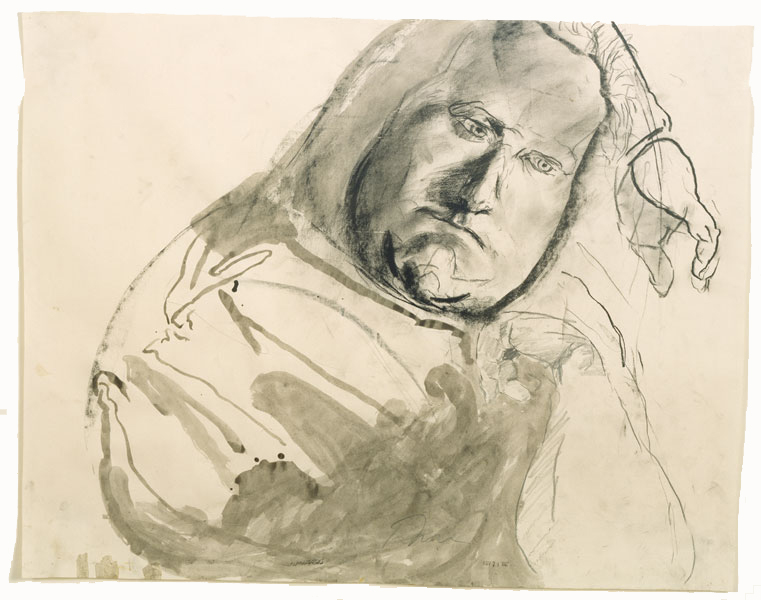
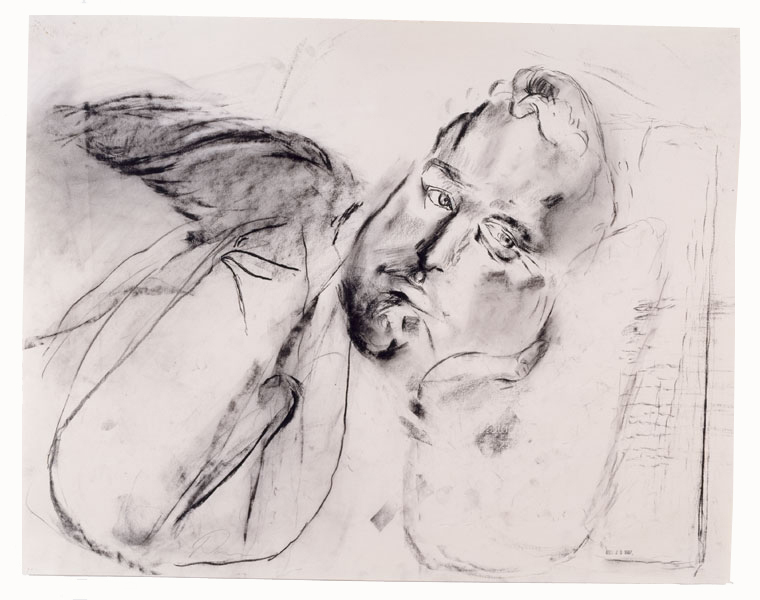
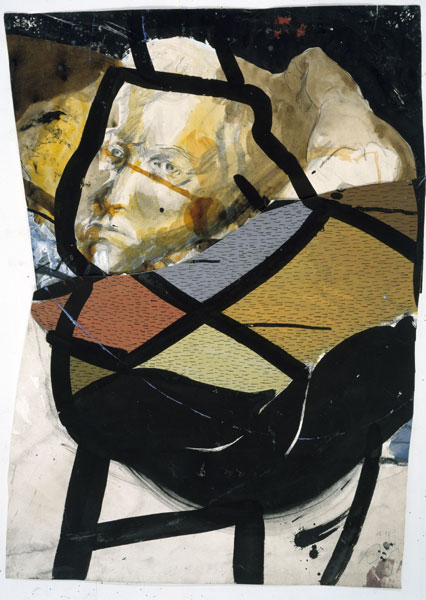
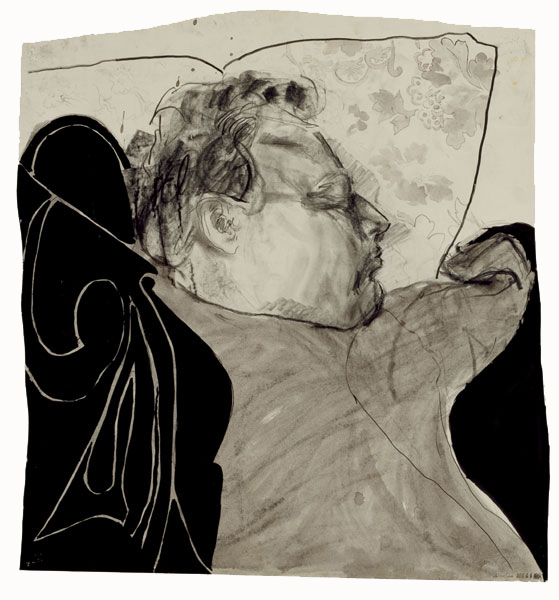
“Hibernation” by David Tomb
Tomb utilizes many of the intangible elements of the tradition, the long cultural and historical associations that adhere to it, as he negotiates a path between the standards of pictorial accuracy and the standards of the painting as an autonomous construction, a condition that becomes most evident in the larger paintings in which Richard’s setting participates in the making of meaning. Here the artist’s strategies are deceptively simple: an unconventional sitter, a serial format, and a persistent willingness to maintain his dialogue with the image as he continues to revise and invent long after the sitter’s departure from the studio. From that point the painting goes its own way. This is not Freud’s investment in relentless observation; neither is it Katz’s wry, elegant irony; not Neel’s frank humanism; not the intercourse with technology, media, and consumerism that occurs in Close or Warhol. It is something else altogether, paintings that use portraiture to open a psychological space of anxious, contemporary restlessness.
Historically, portraiture is the genre most classist in its origins and traditions, and its techniques generally have had their bases in social and cultural assumptions, transformed into readily understood codes of self-presentation, those clues regarding the identity and social standing of the subject, the many signifiers of class, vocation, and so on. They are, or were, the very stuff of cultural commonality and continuity, deployed with the agreement of artist and sitter alike. Tomb plays upon the withdrawal of the old social and class codes from both art and life, and upon the nostalgia that surrounds the peculiar void left by their absence, which reflects a more general sense of the loss of cultural security. By contradicting pictorial expectations, uncertainty is open to exposure. If these pictures appear as accessible at first, closer examination will soon disabuse us of the security with which we approach, as if by habit, this normally docile genre. Tomb grasps the power of the specific — the detail work of portraiture, the irrevocable reality of the individual human being — as a vehicle for what was once called universality, but which may no longer exist.
Richard’s reentry into the artist’s life was fortuitous. He and Tomb had known each other in high school and then became college roommates for a brief time. With school completed, Tomb came home to the Bay Area to pursue his interest in the figure, and particularly the face. Richard was unemployed at the time and so he assumed the model’s role, hanging out almost every day in Tomb’s studio near the Oakland estuary. The continuity of his presence would soon represent a kind of standard or gauge, the control factor in what had become a focused investigation into the viability of a postmodern portraiture.
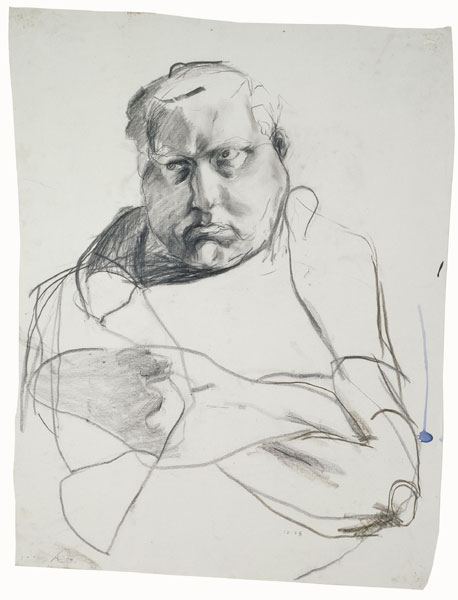
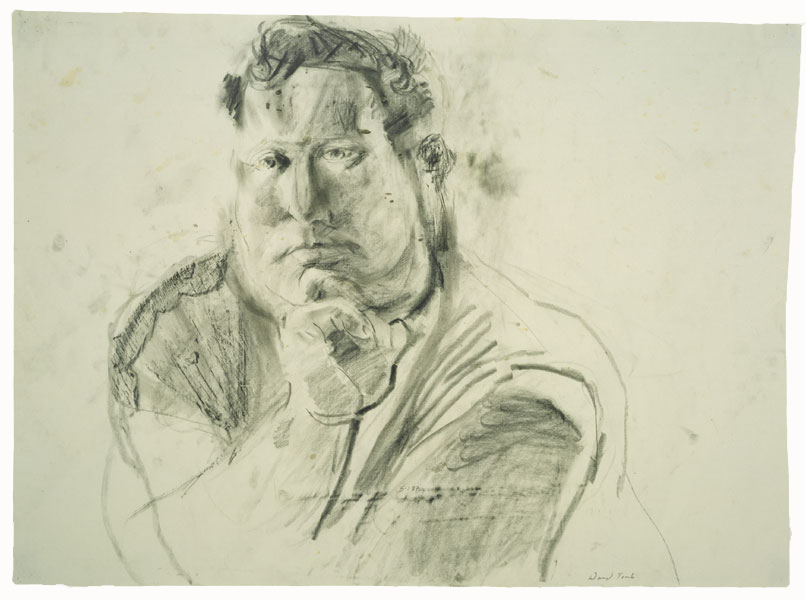
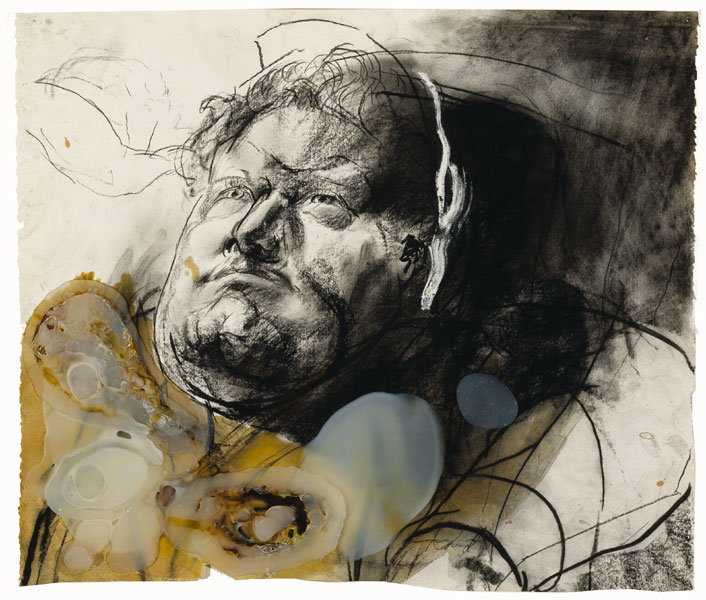
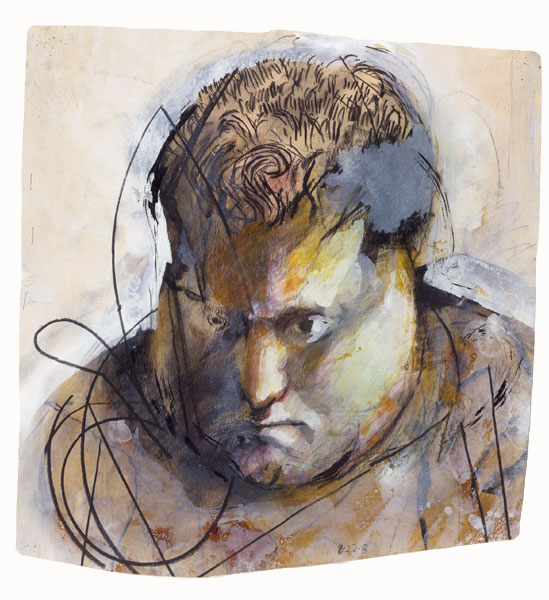
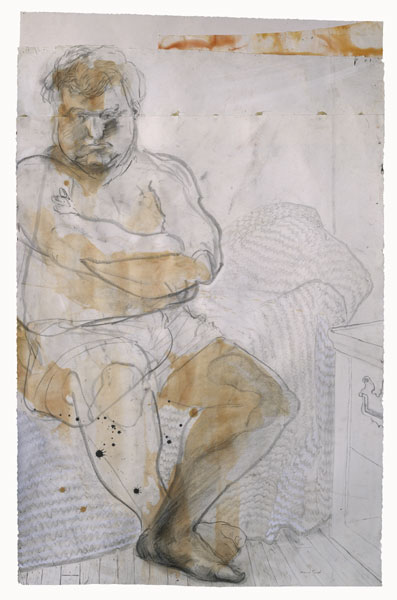
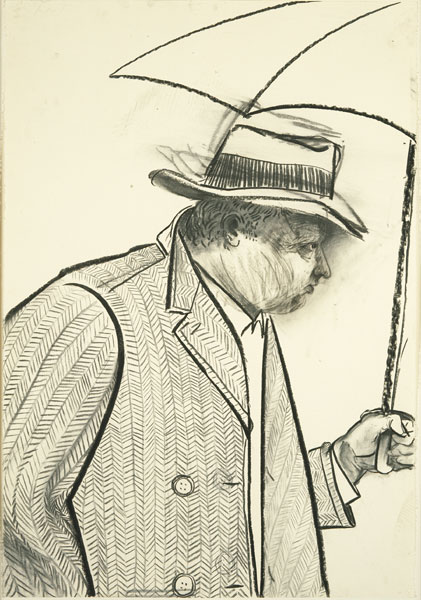
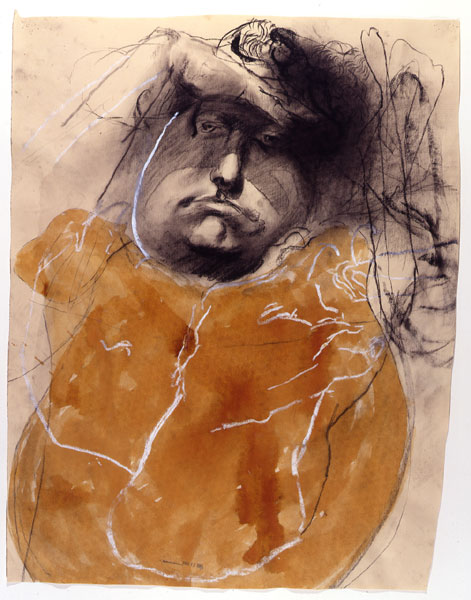
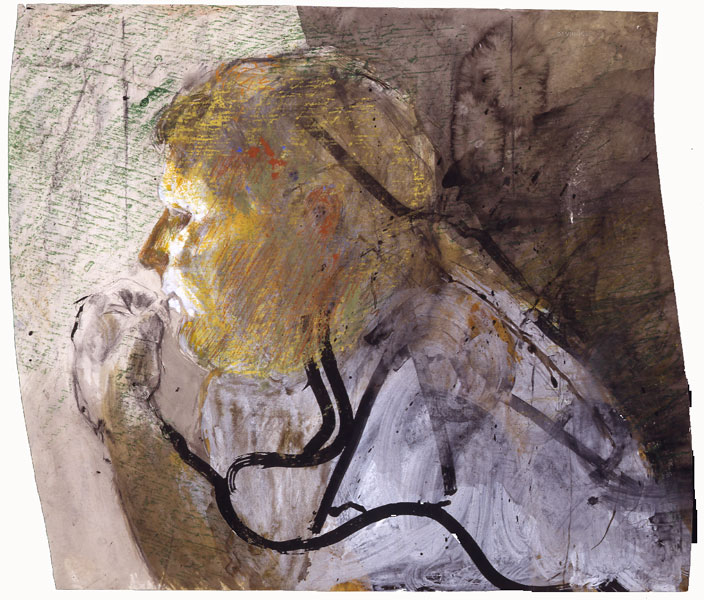
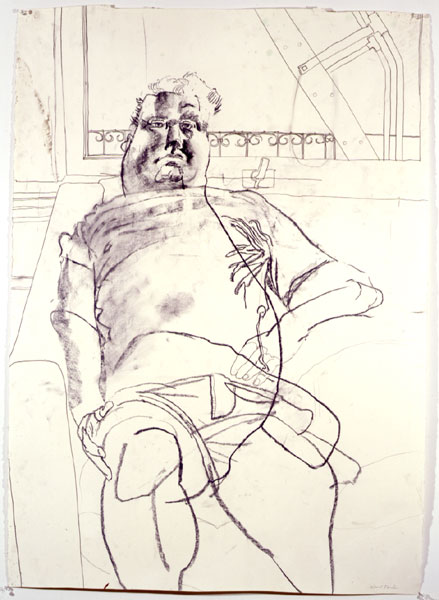
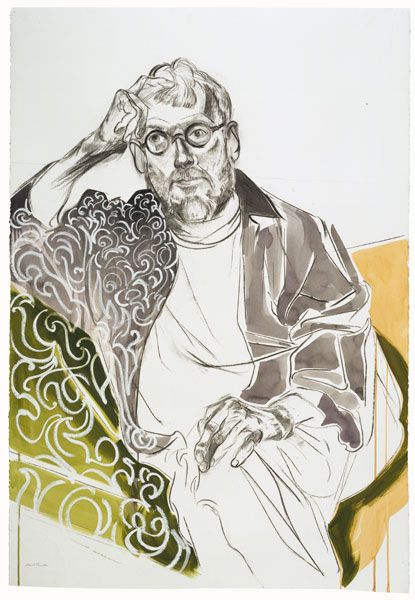
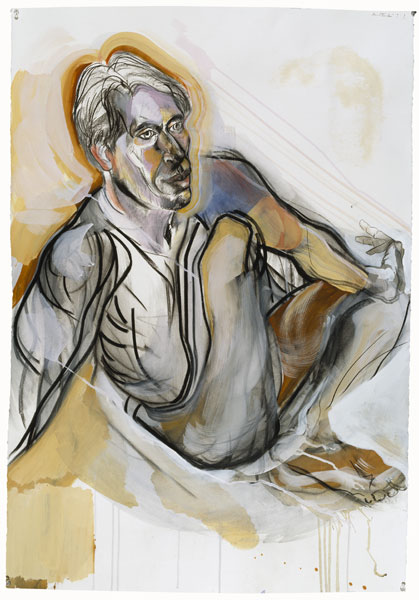
In fact, Richard was especially well-suited to the task. His poses were unaffected, and his squat, stocky body and pear-shaped face, with its close-set eyes and sagging jowls, defied the idealization that is the legacy of the eighteenth century. His moods shifted unpredictably. On any given day, he could be open and lucid, or impenetrable. Everything about him challenged the conventions of portrait-making. As a whole, the series displays enormous variety — not simply a daunting range of poses and postures, many of them far removed from familiar studio and academic traditions, but also an array of media, application techniques, and compositional devices. The artist, it seems, wished to remain as mercurial as his subject. Over time, he also permitted a specific narrative ambiguity into the work. Do the continual shifts in method and technique reflect the sitter’s moods, or in his own?
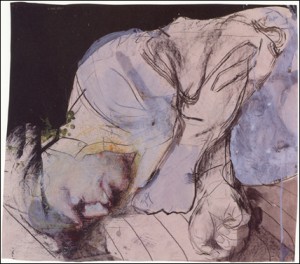
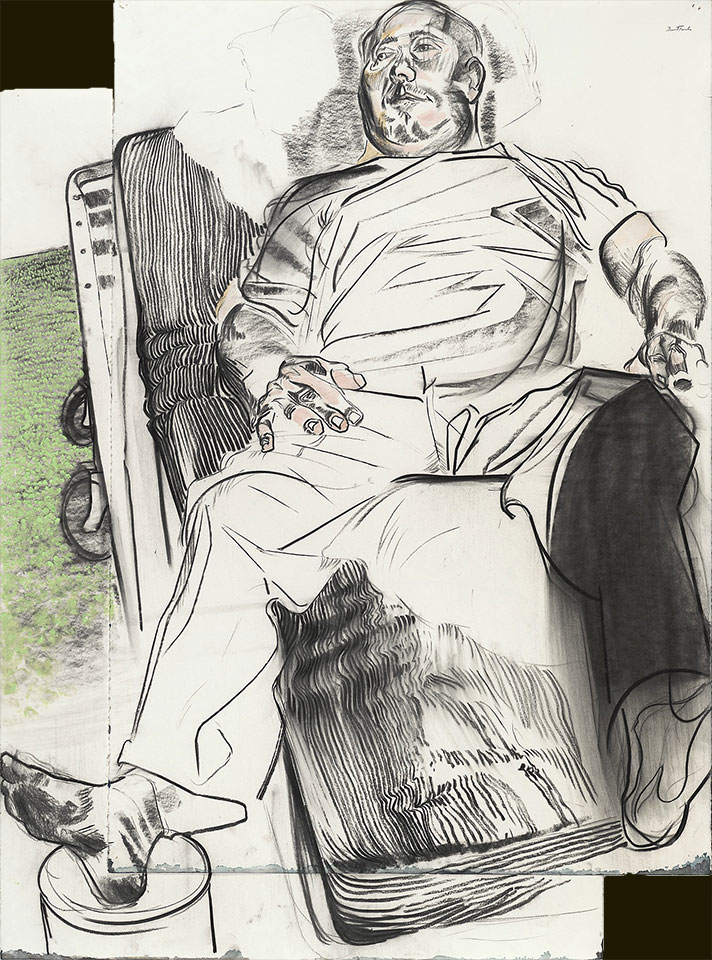
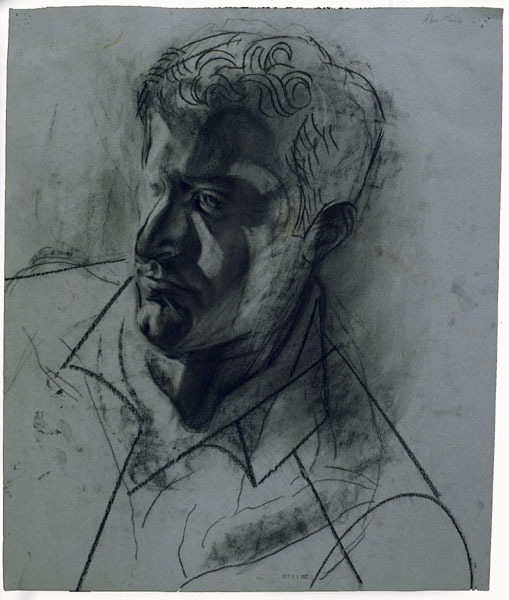
“Richard” by David Tomb
As a comparison, think of Katz’s portraits of his wife Ada, begun in 1957 and now numbering more than ninety paintings. The ever-placid Ada, with her introspective gaze and elegant European features, remains constant — almost implausibly so — while the scenes change around her. Resonance builds from the repetition of her smooth, unfazed image, until the peculiar simplification and idealization of the subject begin to take on a narrative truth. Nevertheless, the distinguishing atmosphere of reassurance and continuity in the Ada series lies more in the fixity of the artist’s style than it does in the model. For Tomb, on the other hand, portraiture’s role as a literal, totalizing narrative of continuity is no more than an optimistic illusion. The truth of the series is that neither Tomb nor Richard can realistically envision themselves in terms of either “reassurance” or “continuity.” Quite the opposite. Imagination is the ground Tomb offers his sitter, and it becomes the true field of inquiry.
Throughout the Ada series, the rhetorical register of Katz’s elegant, unruffled style expresses of the difficulty of an absolute human contact, and the artist’s reliance upon a decorative means of portrayal suggests that the artist regards this condition in terms of his own shortcomings; his Ada eventually becomes an image characterized by its repeatability. Faced with all that he cannot know, Katz turns to visual artifice and an exaggerated simplicity, both of which are displacements or replacements of the subject by art. Richard is not like that. He asserts himself as a discontinuous presence, not necessarily different from one picture to the next, but never quite the same, either. As a result, the continually expanding accumulation of images is ultimately a narrative of interruption, fracture, fragmentation, question marks. Like the unreliable narrator of modernist fiction, Tomb struggles on, day after day, but once again, as the images gather like a clamoring crowd, he finds that he can make no claim for his omnipotence as artist. He merely states his case, while, at the same time, the paintings gradually surrender their artlessness. His high level of facility and commitment to his subject seduce us into trusting his voice, his version of events. But can we? As far as we know, the greatest distinction between artist and sitter is only the thin line of technical proficiency.
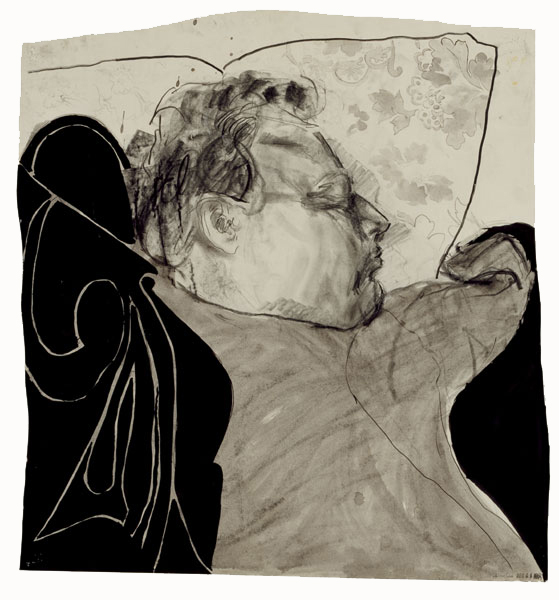
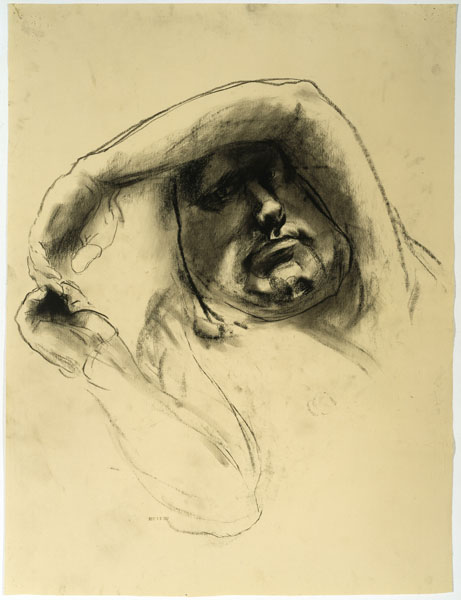
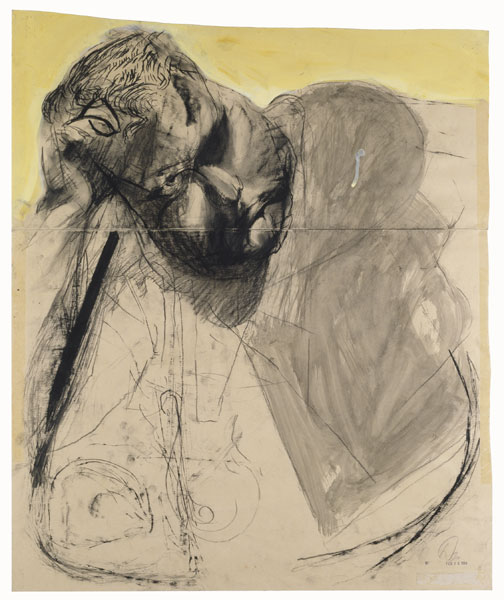
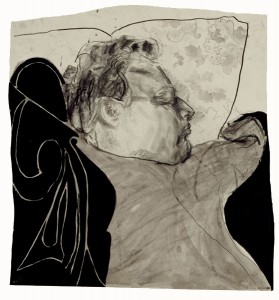
Still, it is possible to chart a pathway through the development in the series. Many drawings, including Navigation (1985), Conversation, Hibernation, Richard — Haldol, Artane (all 1987-89), and With all the evidence there’s nothing like a vacation (1989), are more or less conventional renderings, mostly relaxed and informal. To some extent, the fastidiousness that Tomb grants the face and head will recall Freud’s long, scrupulous gaze, although Tomb may also activate an exaggerated chiaroscuro, regions of shadow and inky darkness that suggest unreachable or unattainable territories.
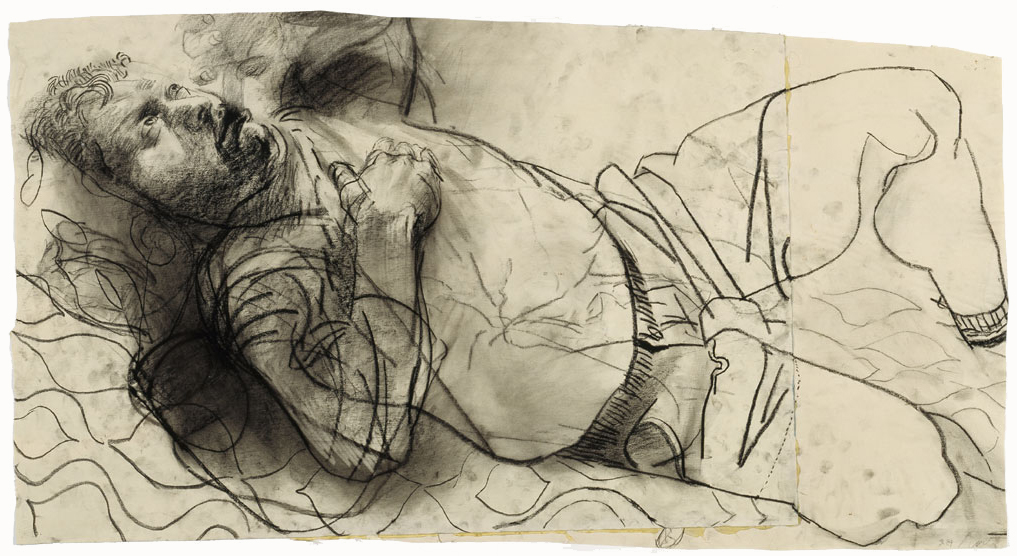
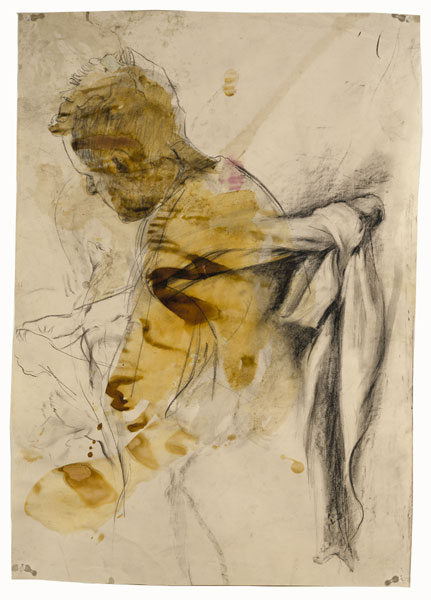
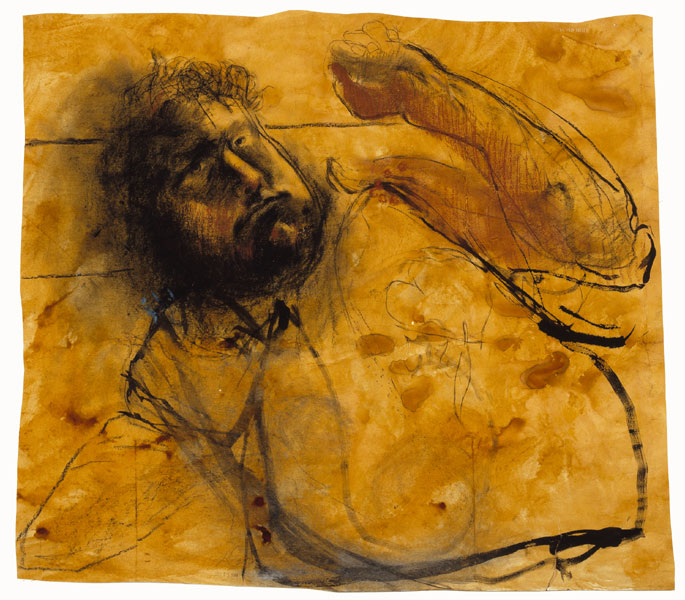
The artist seems to have recognized early on that “penetrating” the sitter would prove far more difficult than he had imagined, perhaps impossible. Subsequently, as the pictures move away from conventional likeness, the articulate rendering of the head also tends to dissolve — or fray — into gestural lines that may flicker and snap like live wires. Richard, awash amid the echoes of so many images, becomes a more vivid presence and, at the same time, more withdrawn. In some instances, a portion of his face disappears in a blur of erasure strokes. Both artist and subject grapple with Richard’s volatile psychology, and there are pictures in which his self-control begins to slip, rendered by the artist as gripping descriptions of an unraveling personality. But the narrative of the alienated, self-contained consciousness may be another of Tomb’s intentions for the growing series, and so Richard, as one critic has suggested, finally comes to represent a kind of postmodern Everyman. In the drawings Richard — Nocturne (1988), Richard — Haldol, Artane (1988), and R. Meander (1989), Tomb uses mixed media in such a way that the figure, in a posture of dreamy repose, wrapped in swirls of lines and marks, seems to be simultaneously emerging from and retreating back into the surface of the paper. There will be no escape from the bondage of self.
In conventional portraiture, the significance of the subject normally lies outside the art world: “art” has been commissioned to elevate that significance, and so the painting is itself iconic and, to the extent that it formulates identity by incorporating details that refer to the world of the sitter, indexical. This explains the conservatism of the genre: that long, complex history of associations regarding “appearance,” “character,” and “social status” assist us in “reading” the image and “classifying” the subject, every detail of which has been encouraged by the artist in complicity with the sitter.
But the sheer familiarity of those well-groomed, carefully tended assumptions will be the means by which Tomb deflects the knowability of the portrait subject. In another echo of Freud (and of Chuck Close), Tomb identifies his sitter only by first name or initials, if he is identified at all, and in picture after picture, Richard’s clothing is commonplace, undistinguished, dollar store fashions. As a signifier of class, Richard is a nobody. And yet, as the object of such lengthy scrutiny, he inevitably becomes iconic to some degree. He is not simply an anonymous sitter with no voice in the work, but a specific individual, well known to the artist, and far more than a model. But by withholding some of the most essential details of portraiture, those clues that provide assistance in “reading” the subject, Tomb lets the viewer know that a deeper reading of the painting is necessary. Thus he redirects our reading back into the canvas, into the structures beneath the surface of the forms, structures that have developed from the mirrorlike relationship between artist and sitter.
In the Ada series, once again, Katz seems to accept unknowability as a point from which to proceed, and so he contemplates the ways in which our comprehension of the Other may be formed by wholly exterior considerations, until the subject herself appears as a kind of flawless mask. For Tomb, the Richard series represents an extended essay that addresses a similar kind of unknowability, or the obstacles to knowing, yet clearly he feels a strong need to keep up the effort, to do his best, to disregard assumptions. Rather than proceed in support of a predetermined conception of the portrait image, he applies pressure points of stress in the work itself, as he encounters them, in order to discover exactly what can be taken as a given, and what can not.
Considered alongside some of the other portrait/figure series by American artists during the latter twentieth century — Alfred Leslie’s pictures of his wife Constance, William Beckman’s pictures of his wife Diane, Joseph Raffael’s Lannis series, family portraits by Fairfield Porter and Willard Midgette — Richard does not look like much of a muse. He is more like a co-conspirator, a dark accomplice. In a way, the Richard series lies closer to Freud’s pictures of his mother, the products of hundreds of sessions. Idealization is never at issue as Freud probes the actual and pressing banalities of daily life: sadness; fatigue; despair; boredom; the resigned wince of lingering physical pain; age. The inward-gazing Richard, regarded through Tomb’s eye and brush, is a bit like that, projecting nothing so much as his own uneasiness before the scrutinizing eye.
It is in the paintings that Tomb most aggressively asserts the intention to use portraiture’s dependence upon its subject as his means of achieving independence and autonomy for the work. Despite the many ways in which representation is blatantly privileged in traditional portraiture, and how this almost invariably overdetermines our reception of the picture, portraits are artworks, and will behave as artworks in the end. “Likeness,” then, in the context of the portrait, registers as both theoretical and a rhetorical — it has multiple visual grids from which individual meaning may be extracted and cultural needs addressed — and strictly speaking, “likeness” is a term that refers not merely to the subject, but to the viewer, who reconstructs an identity around an image, including a sense of resemblance, bringing along a tangled mass of memories and associations to aid in the reading process; this applies as much to the contemporary portrait, which occupies its own theoretical field, as it does to the portraiture of Joshua Reynolds or Gilbert Stuart, work that was well theorized in its day, and to which we now add the register of historical meaning. So accuracy is just one measure “likeness,” one element contributing to the validity and the “truthfulness” of the work. In the Richard series, where likeness struggles with Tomb’s highly detailed, often facile expressionism, resemblance is a useful irritant, like the grain of sand lodged in the sensitive inner lining of the oyster’s shell.
Tomb, I think, fully understands this kind of cultural machinery and how it intervenes in the portrait, particularly the serial portrait, which over time creates its own corpus of signs, symbols, fetishes, and referents, its own subgenre of interpretation. Richard’s frequent glumness erases the portrait’s theatrical associations, now mostly extinct, a minor but still positive condition that enables Tomb to move through hazardous zones between identification and identity, between depiction and characterization, between self and other. His strategy is well served, too, by the serial format, since no single portrait in the series can hope to convey the endless small episodes and events that comprise the history of its subject, the myriad encounters, the habits of thought that arise from the rather prosaic, time-consuming process of working from a sitter, as well as memories of prior encounters, and plans for future paintings. The serial portrait holds out the promise of more information, and more, and more again, and with it, the knowledge that we ultimately seek. At the same time, however, this Richard, as a personality, is, in a literal sense, built. After so many drawings and paintings, he has become a constructed man, Tomb’s own creation to an extent not so easy to determine. Perhaps he is an invention. Indeed, the structures that support this building come from the artist, and in a series of such length and breadth, they can be said to reflect his interior desires, the structures of his own consciousness.
The result, needless to say, is the creation of a dual history that is at first parallel and later integrated; like two railroad tracks, moving toward a point in the distance, that actually do meet and continue on as one. We sense that artist and sitter play roles they have developed together. Yet even as the quantity of information mounts, conflicts in the narrative remain. The narrative does not end organically, and so it never really offers the satisfaction of denouement: there is only the flow of images marked by a beginning and an end, but no conclusion. In fiction and film, time leads, as if by natural course, to a moral, to fate, to closure. Here the serial portrait finally proves itself to be an illusory narrative, perhaps even an anti-narrative, asserting as its own moral the discouraging impossibility of a thematically organized finale. It ends as life ends, abruptly, without apparent warning.
A trio of paintings from the last years of the project, Navigation (1988), Killer Bee (1989-90), and Albany (1990), reveal the degree of risk that Tomb has accepted in this series. In Albany, Richard, seated in a gray-blue butterfly chair, arms crossed in either petulance or indignation, is an almost ghostly figure sketched in graceful, reductive lines, a few of his features lightly tinted: a drawing within a painting, and a token of absence. There is a great deal of space around the figure, much of it dark or shadowy, heightening the ambiguity of the sitter’s mood. His own lack of color creates an “empty” center, like a pale hole surrounded by color, including a pale orange expanse along the right wall and, especially, a handsome still-life above Richard’s left shoulder. Richard appears to be occupying a corner — he has always been “cornered,” in a sense — while the realistic pictorial effects around him increase the visual focus on the empty centrality of his image, and at the same time, provide a tangible links to “reality.” And reality is at issue. The handling of the foreground, with its hundreds, perhaps thousands, of small vertical marks, like nicks — an obsessive, labor-intensive task — effectively blurs, and certainly attempts to eliminate, the psychological demarcation between painter and subject in a way that is actual, not symbolic. The atmosphere is close, as heavy as lead, and while the strange, inexplicable flow of marks, like mail from a suit of armor, further emphasize Richard’s centrality and his self-enclosure, we must think, too, of the artist who invested so much time inscribing them.
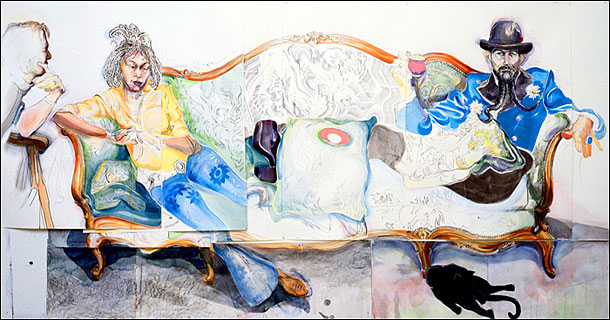
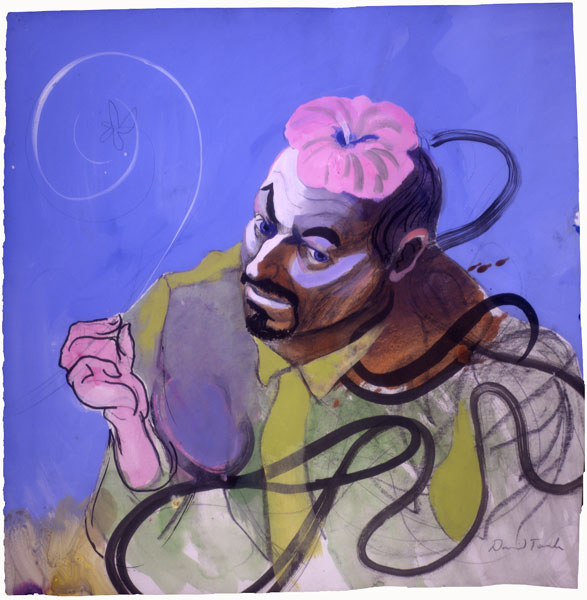
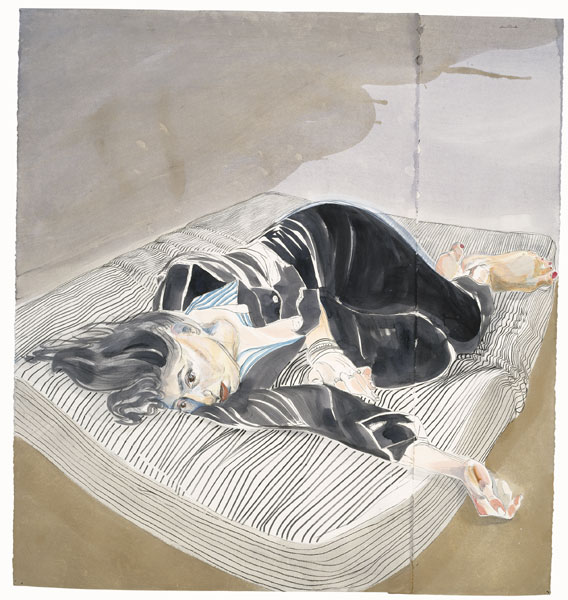
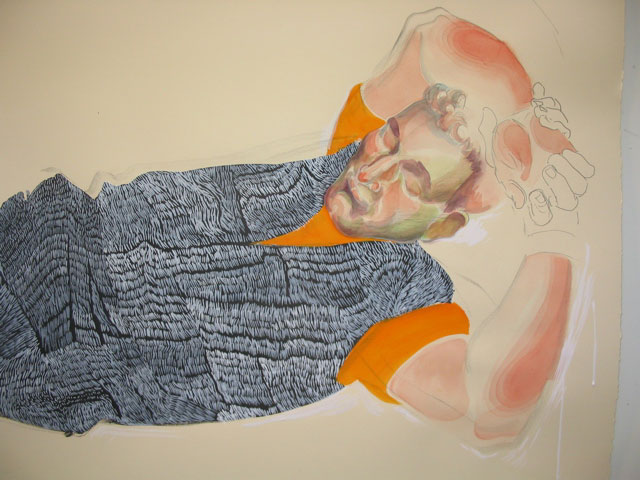
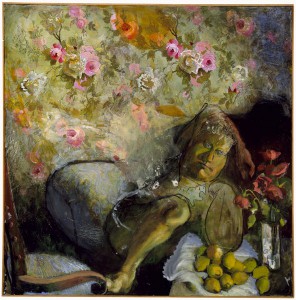
In Killer Bee, a supine and apparently sleeping Richard has been placed on the right side of the canvas, hard against the edge, while a great ovoid shape, like the light of a projector, rises behind him, revealing sensuous, painterly masses of color and a spray of stenciled flowers: it could be a dream, an emanation, simply a light behind the shadowy self, a nimbus. In any case, it is thematically joined by a sequence of paintings of dream and fantasy: Richard and Mockingbird — Navigation (1987); Still Lives in Living Color (1988); Fall Migration (1988); or Settee (1988-89). As Tomb “imagines” Richard’s state of mind, his fixations and dreams, the semantic connection between “imagine” and “image” is brought into play: in Fall Migration, Tomb agitates his brushstrokes and heightens his palette to capture the momentary bright spots and to modulate the light leaking from dim corners and hallways; he disrupts notations of perspective and continues to pursue some of the tropes that appear elsewhere in these paintings, the waves of cloth, the wired windows, the feeling of an empty house, a figure abandoned to the chiaroscuro of his dreamworld. While some of these paintings verge on the sentimental, it is Richard’s isolation that holds them in place, the Richard who watches birds but does not touch them: sadness is the predominate mood as the mockingbird on the table turns toward the blue window and escape, while Richard’s roving eye rolls in exactly the opposite direction.
In Navigation (1990), a large diptych, Richard appears on the right side of the picture again, back in the butterfly chair, a beautiful lavender color cloaked in gauzy shadow. Richard’s lower body is a schematic geometry of restless abstract shapes as he obliquely faces a stack of television sets that, oddly, project their gray illumination toward the left edge of the picture. He cannot “see” the image, and neither can we, but he seems about to rise. A bright table lamp on the television illuminates the scene, casting its thick, abrupt shadows. The floor, however, which occupies most of the composition, dissolves into thousands of tiny marks, a pattern characterized by instability, the obsessive and neurotic, the ephemeral. A ghost limb extends from the figure, a tentative probe, and you can almost feel it slip through the jittery field.
Such great liberties speak to the artist’s broad range of conception for the series, of course, but they also transform the portrait into a mode of inferred storytelling, as Tomb, with his incessant mark-making, casts some crucial aspect of his own self in the direction of this person with whom he has spent thousands of hours, in an effort to attain some kind of truthful — though perhaps untranslatable — version of their communion. His self-exposure, explicit in the techniques of Albany and Killer Bee, suggests, too, an effort to invest the art object with a subconscious of its own, one that will echo Richard’s troubled inner world, to which the artist regularly recalls our attention by using the word “navigation” in so many titles. It may almost go without saying that artist and subject are both navigators across, or through, this project, individually and together.
There are many Richards, always the same, forever different, from the cloaked darkness of Pugilist (1989) to the disembodiment and indeterminate swirls of Odd Friends (1989) to the distant gaze and disappearing body of Sleeper (1990), drifting, it seems, behind blue snow. By the end of the series, the rectangle of the painting no longer coalesces entirely around the portrait image. In some cases, such as Albany, the painting opens out from the figure to a periphery filled with subject matter, as present, and as invested with significance, as the figure itself.
The Richard series was an arduous project, and so the progression of images tells yet another story, of the toll exacted upon the artist by his immersion in some of the most difficult questions surrounding contemporary involvement with portraiture. At the same time, the series must be counted among the most original excursions into the genre in contemporary art.
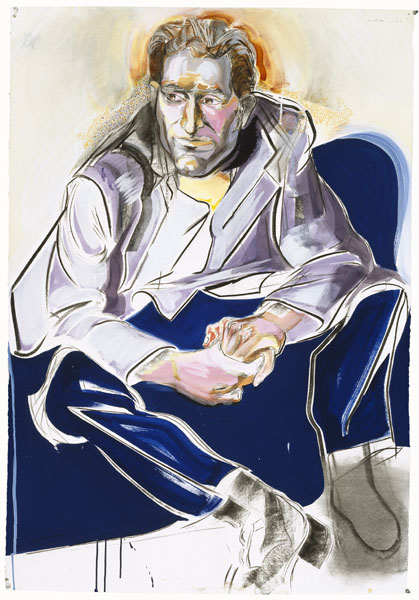
By 1990, however, Tomb had begun working with other subjects, occasionally in multiple sequences, utilizing the lessons of his earlier experience. The figure who appears in Peckerwood and Arcadia (both 1993), apparently a musician, conveys nothing so much as a detached, ironic weariness; he is depicted without the accoutrements of his profession, and could, strictly speaking, be anyone. The details of portraiture, those deliberately inscribed clues, left behind like footprints for the viewer to follow, are simply jettisoned, as if to avoid any potential confusion between the sitter and the sitter’s life outside the painting, two quite different things. Tomb also began experimenting with urban landscapes, mostly scenes from Oakland’s industrial waterfront, transformed into gray midday nocturnes that bear a certain spiritual kinship with the Richard series: funereal black birds and skies soaked with diesel soot haunt pictures in which men move like shades across a brutalized, inhospitable terrain. Such stylized scenes join, of course, a modern tradition, both visual and literary, of the wastelands and blighted landscapes of twentieth-century human industry.
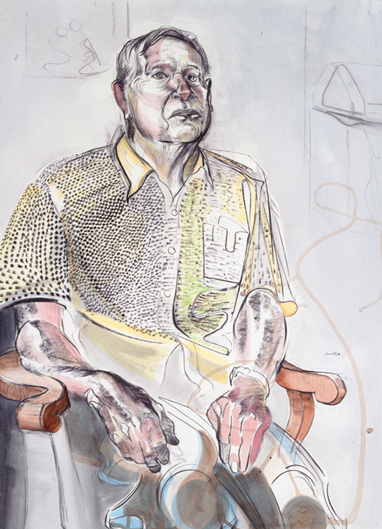
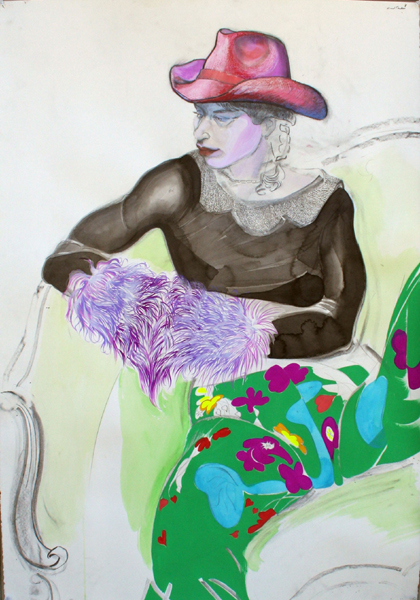
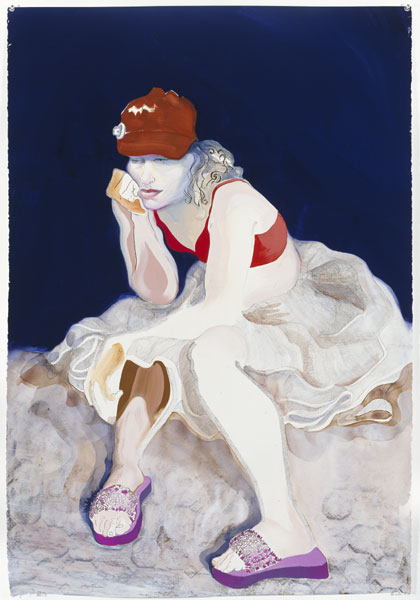
On the other hand, many of the post-Richard portraits show the interested, equitable eye of an Alice Neel. Tomb shows little inclination for Neel’s playful distortions, or for her delight in painterly interpretation, although his empathy is always apparent; and, as in Neel, an attention to hairstyle and clothing locates his figures in time, if not place. Yet, the artist has learned to look hard and close, and the paintings reach for an increasing economy of means, as well as an increasingly sophisticated application of color as a signifier — the startling blocks of blood-rich red that wrap the melancholy Donna (1995), her black hair askew in gestural lines, her face nearly as flat as a mask as it perches upon her clasped hands — or Vault (1995), a hard-looking man, balding, with a forehead like a Yosemite promontory, his face broadly described in reddish flesh tones and resembling a piece of pummeled clay, seen only in a bit of black T-shirt against a field of soft blue. We must invent our own stories, and these pictures invite us to do so, with a few provocative details to set the machinery of intuitive, poetic interpretation into motion.
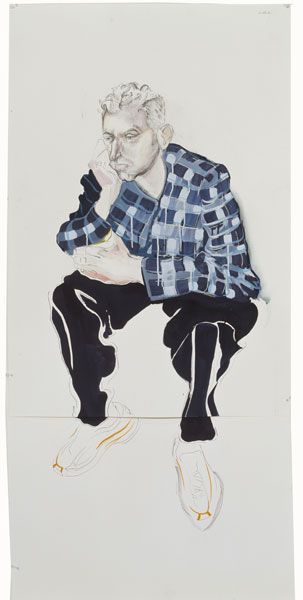
A quartet of portraits of Jurek echo the Richard paintings. In J (1996) and two untitled portraits (1999), he is portrayed as a face virtually implanted in a field of thick, blue brush strokes. His graying hair hangs almost as heavily as his jowls and fleshy, sensuous lips: a brusque and weary worldling —the information, once again, is scant, with only the rich heaviness of the paint to provide details. Another untitled piece (1999) places the model on a sofa, against a pink background, the collar of his print shirt flung open indifferently. The weariness, it seems, has shifted to anger. A narrative begins to arise.
Rather than providing an anticlimax to the epical accomplishment of the Richard series, these paintings suggest hard-won insights. Tomb prefers the tough subject, the model who catalyzes something uncomfortable in himself, something that finds its way into the image. He continues to confront other dilemmas, as well — not simply the tension between the demands of a contemporary practice and the intractability of the portrait genre, but his own desire to provide a recognizable image at the moment before a surplus of information begins to undermine the challenge of the work as art. These issues are actually rather broad, based on the variety of responses to them: in Close, the references to media and the creation of likeness as a by-product of deliberately ingenious, highly refined processes; in Philip Pearlstein, the treatment of the figure as still-life or found object; efforts by Beckman or Widgette to turn a transparent gaze upon familiar faces and bodies; Freud’s relentless empiricism; Neel’s Balzacian ruminations, cast from a Depression-era political humanism; Francis Bacon’s specimen-like exposure of the psyche, snarling angrily in the light of public display; Warhol’s revelation of the elusive, perhaps nonexistent boundaries between individual identity and media identity, the soul burn of celebrity. Together, they form a complex, even contradictory picture of the modern citizen. Tomb works between them, a wily, tenacious researcher of the ground between — or connecting — imagination and other. As a painter, Tomb looks at other people. As an artist, self-definition lies at the end of his practice. Meanwhile, he recognizes that the portrait genre as a history is also relevant, enabling current portraiture to operate simultaneously as response to a venerable tradition and as a continuum.