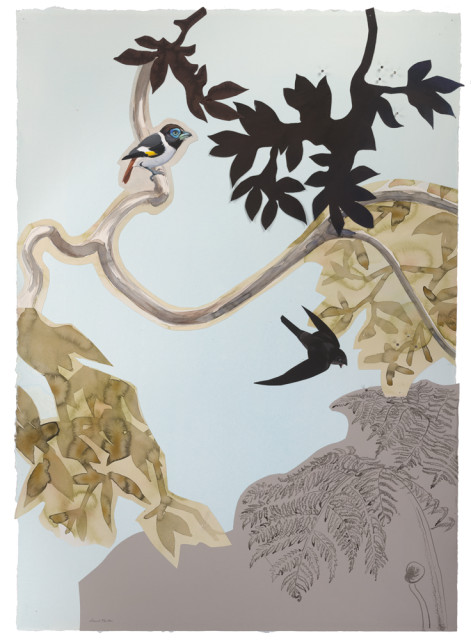
The core mission of stARTup Art Fair is to provide an exhibition venue for unrepresented artists.
">
The core mission of stARTup Art Fair is to provide an exhibition venue for unrepresented artists.

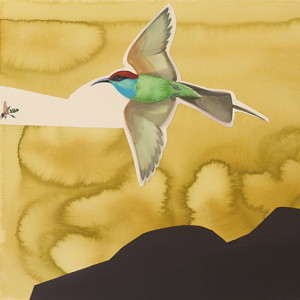
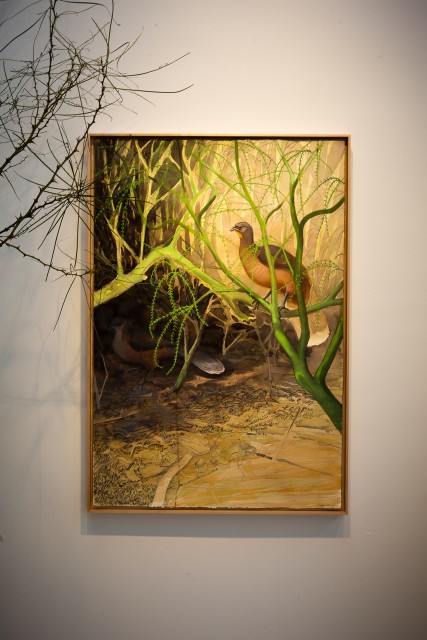
Blue-throated Bee Eater by David Tomb
Originally published here by Ilana DeBare.
David Tombâs two childhood loves were art and birds. As an adult, heâs brought them together â in a way that supports international bird conservation.
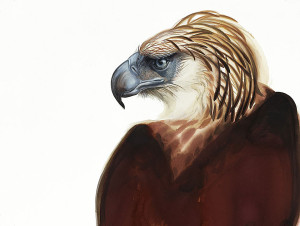
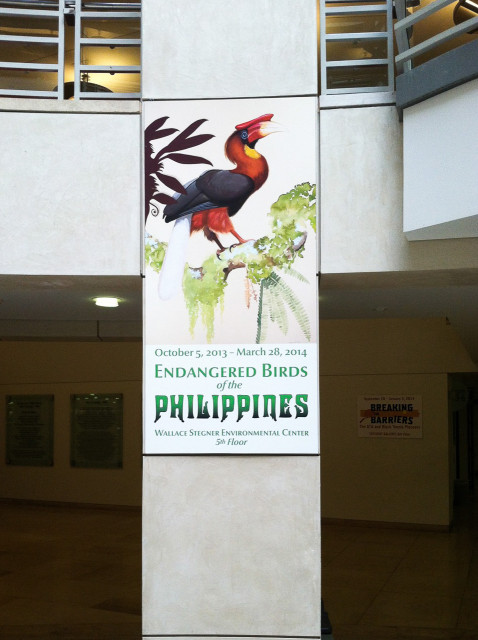
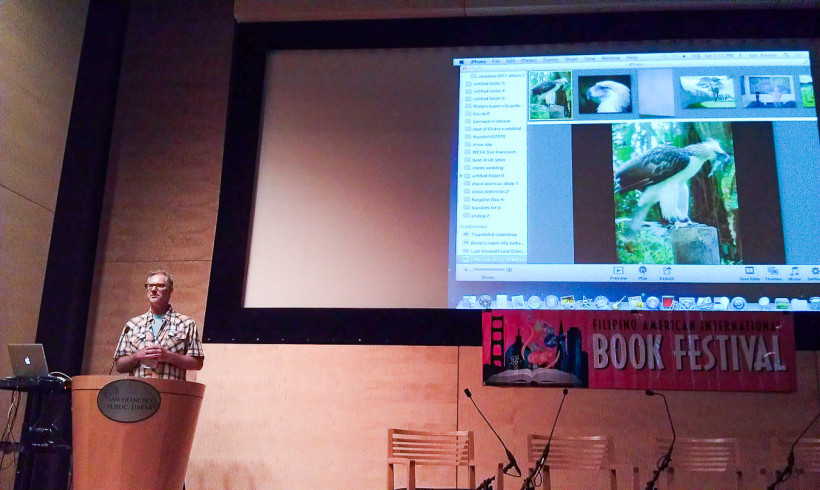
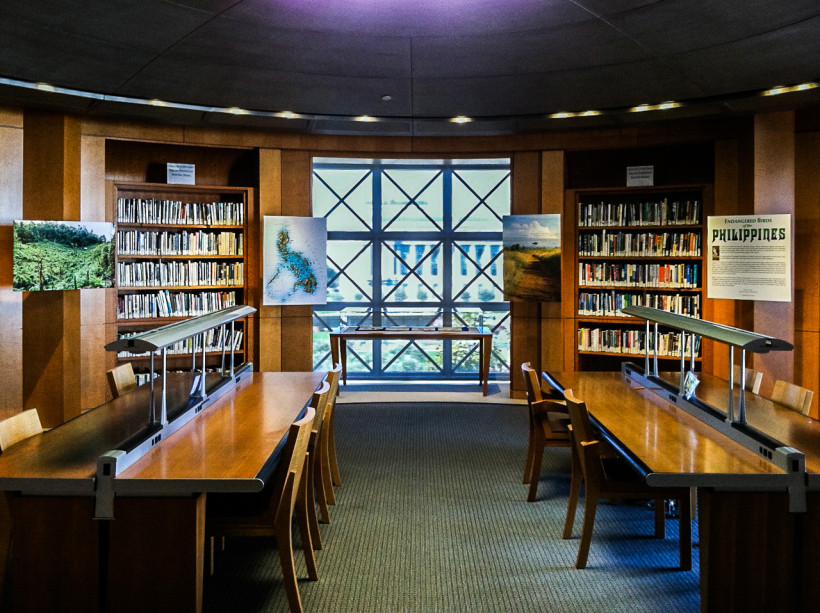
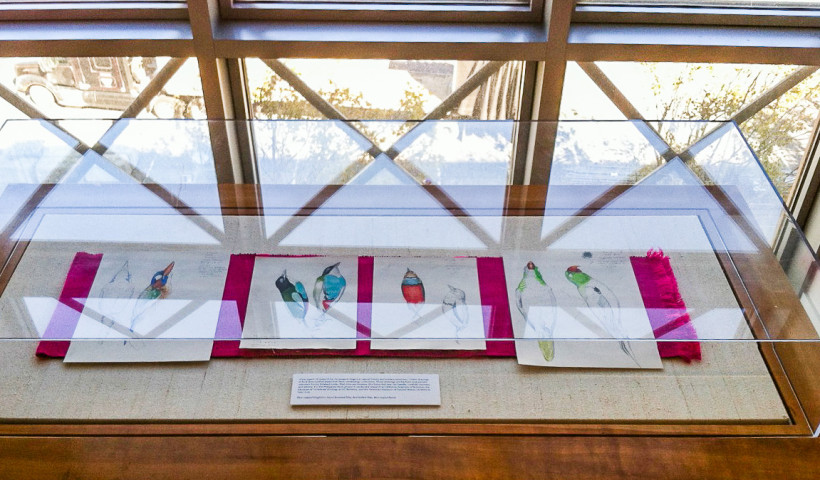
Tomb â a San Francisco painter and collage artist â currently has a show at the San Francisco Public Library focusing on endangered birds of the Philippines, including the majestic Philippine Eagle.
Itâs part of an initiative to showcase endangered species in the Third World, and raise both money and awareness to help them survive. Together with several childhood friends, Tomb runs a small nonprofit called Jeepney Projects Worldwide that so far has used art to spotlight the Tufted Jay (Mexico) and Horned Guan (Mexico-Guatemala), as well as the Philippine Eagle.
âIâd always wanted to paint birds. As I started traveling more and getting out into the field, mostly Mexico, I thought, âWhat can I do to help?ââ said Tomb.

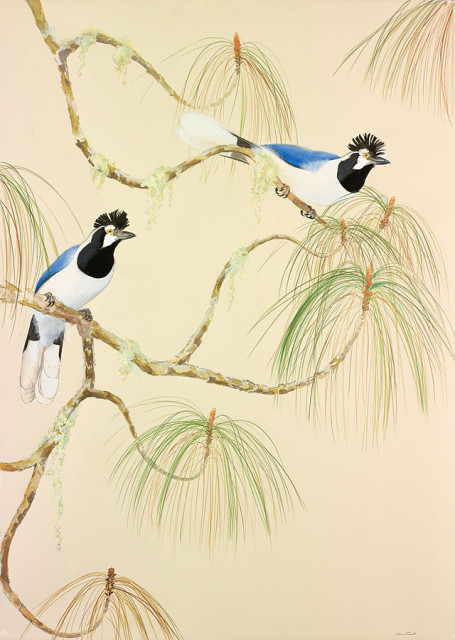
Tufted Jays by David Tomb

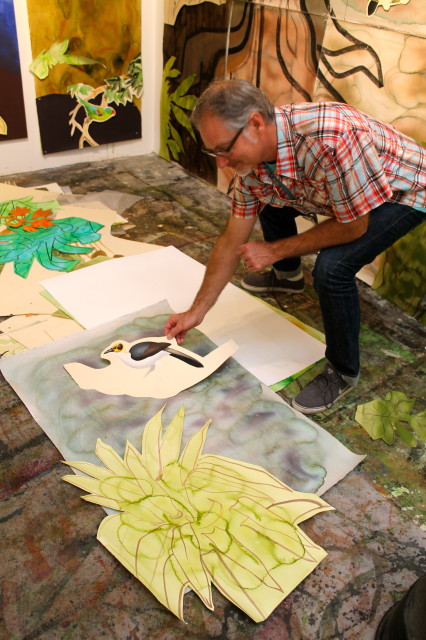
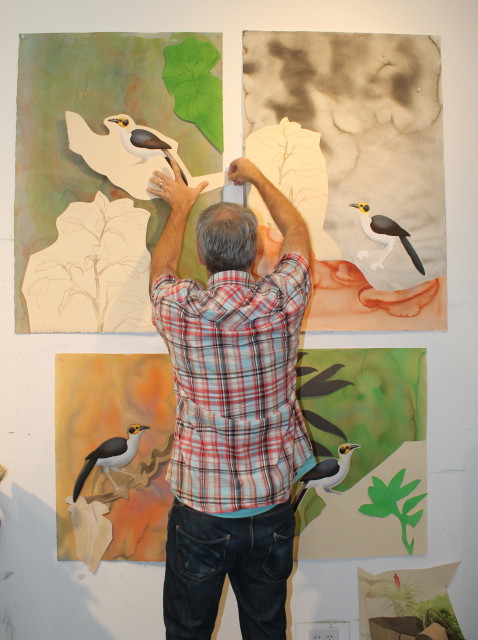
David Tomb working on a collage / Photo by Ilana DeBare
Tomb started birding as a boy in Oakland and then Marin County, where he fell under the spell of the late birding legend Rich Stallcup. He took part in his first Christmas Bird Count at age 11 in 1972.
âRich was the M.C. compiling the numbers at the end of the night,â Tomb recalled, âand I thought, âThat guy is really cool. I wish I could be like that when I grow up.â It was the first time I remember thinking an adult was cool.â

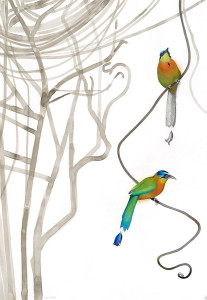
Blue-crowned Motmot by David Tomb, in graphite, ink, colored pencil, gouache and water color wash
For the first twenty years of his career as an artist. Tomb focused on painting people. He aspired to paint birds, but couldnât figure out how to forge the same personal connection he had when using live human models. âI would look at photos of birds and think, âWhat am I going to do with that?ââ he said.
Several years ago, he took the plunge. He decided to try using museum collections of bird skins as his models. But he didnât want to simply create straightforward field guide-style images; he wanted to add something personal to the work.
So he evolved a style that combines realistic birds â painted at their actual size â with a more abstract background.
âI like the tension of the two,â he said, âthe realistic-looking bird with the flat cut-out form. It can add interest for the viewer that draws them into the content. It adds to the art experience.â
Tomb has done sketches, paintings and prints of birds, but the SF Public Library exhibit focuses on collage works. Tomb starts by doing numerous bird sketches from museum skins. Then he rubs the back of the sketch onto white paper with the back of a spoon. He redraws the image about ten times, experimenting with poses and positions  â âkind of Frankensteining and willing that image to look more and more alive,â he said.
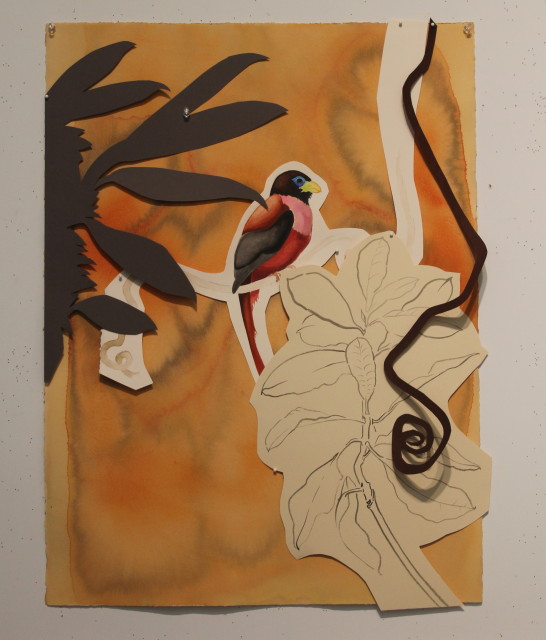
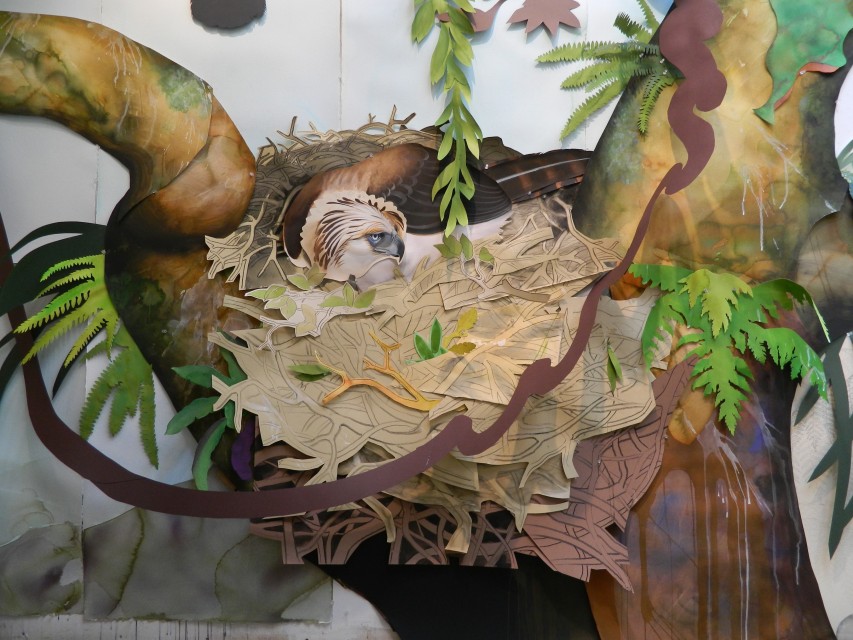
Only then does he go online to compare his image with photos of the bird. Once heâs satisfied, he paints the bird and cuts it out. He also paints and cuts out elements of background foliage or terrain. Then he pieces it all together with pins, moving pieces around like a giant jigsaw puzzle. Some of the pieces are left semi-attached and dangling.
âItâs not 3-D but 2.5-D,â he says, âso the artwork has another layer of life to it.â

Collage in progress of Philippine Trogon by David Tomb
As he traveled to learn about and paint birds, Tomb was inspired to help protect them. His first project was a benefit for El Triunfo Reserve in Mexico, home to the Horned Guan. Tomb created prints of the guan and the Resplendant Quetzal and donated the proceeds to the reserve.
His friends suggested creating a formal group â which became Jeepney (named after the World War II military vehicles that were recycled into colorful public transit in the Philippines). âWe are a tiny group with a big name,â Tomb joked. Tiny or not, they have raised about $3,000 for the Philippine Eagle Foundation and a similar amount for El Triunfo.
âThe Philippine Eagle is the tallest eagle in the world, but there may be as few as 180 to 500 individuals left,â Tomb said. âThe biggest problem is deforestation on a mass scale. The Philippines is down to three percent of its intact original primary forest. They chopped down the trees and replaced them with bananas or palm plantationsâŚ.  But itâs not just a problem for the Philippines to solve. We in the U.S. created the demand for hardwood like Philippine mahogany in the 50s and 60s. This is a western, world problem.â

Philippine Eagle by David Tomb
Tomb recently started selling Tufted Jay prints to benefit Mexicoâs Tufted Jay Reserve. And heâs developing new works featuring the picathartes (rockfowl) of Ghana that could become Jeepneyâs next campaign.
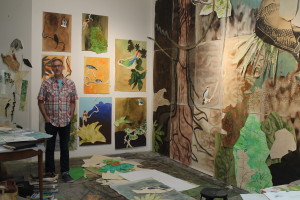
Picathartes right now dominate Tombâs studio in San Franciscoâs Mission district. One entire wall is covered with a giant collage, leaves and vines of the Ghana rain forest pinned up as high as the ceiling. Varied images of picathartes dot the opposite wall, while arm-wide paintings of vines and foliage lie on the floor, tables, chairs.

David Tomb in his studio / Photo by Ilana DeBare

David Tomb working on picathartes images / Photo by Ilana DeBare
Almost as fascinating as Tombâs work-in-progress is the place where he does his work â a former police precinct station near 24th Street.
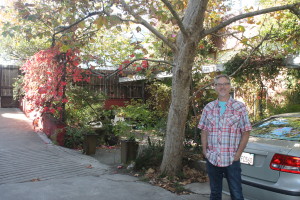
Tomb bought the property fifteen years ago when the city was consolidating its police facilities. At the time, it had an extra-thick concrete parking lot for squad cars and not a single stalk of vegetation. But today, when you enter through the nondescript gate, you feel like youâve stumbled upon a secret garden of Eden. A California Sycamore â planted by drilling a hole through the concrete â spreads its shady canopy over the compound. Grape vines twine their way behind raised beds of California native plants.
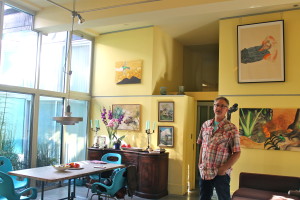
Tombâs family, his brotherâs family and his studio occupy the former police buildings. Renovated to look more like a SoMa loft space than a jail cell or locker room, Tombâs home is lined with his bird sketches and paintings.

But there are even more birds outside than inside.
The landscaping â all done without removing the thick concrete â draws nesting Mourning Doves each year. It regularly gets Annaâs Hummingbirds, California Towhees, Townsendâs and Yellow-rumped Warblers, and flocks of Bushtits. One highlight last year was a McGillivrayâs Warbler on the same day as a Red-breasted Nuthhatch.
âWe have a pretty good yard list here in the middle of the Mission,â Tomb said. âAnd seeing a flock of Bushtits? That can change a regular dreary day and make your spirits soar.â


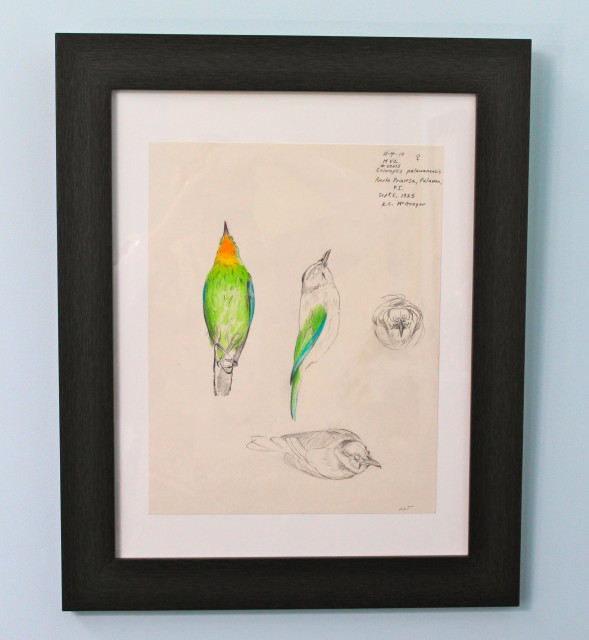
Initial sketch of a bird skin, on wall of David Tomb’s bedroom
You can view more of David Tombâs work at davidtomb.com, or learn about Jeepney Projects Worldwide and its conservation initiatives at jeepneyprojects.org. The Jeepney site includes an online store where you can purchase prints or note cards to benefit Jeepneyâs international conservation partners. David Tombâs exhibition at the SF Public Library is free and open daily through March 2014: Click here for details.
Natureâs color and intricate details are highlights of Maura Keeneyâs floral and plant form paintings and David Tombâs paintings and drawings of tropical birds.


âThis exhibition is a selection of portraits from FAM’s permanent collection. Included are portraits in a variety of media by Ansel Adams, Ann Brigman, Salvador Dali, Boris Deutsch, Doug Edge, David Hogarth, Kathryn Jacobi, Yousif Karsh, Alex Katz, Mac Mechem, Tom Millea, Pablo Picasso, Camille Pissaro, Mel Ramos, Mark Rodriguez, David Tomb, Beth Van Hoesen, Andy Warhol, and Alfredo Zalce.â
Originally published here by Emily Brendler Shoft.
Whether heâs traveling on a muddy trail in the Philippines, hiking through the hills of Chiapas, Mexico, or painting in his studio in San Francisco, artist David Tomb has one mission: to expand the worldâs awareness of endangered birds through art. With the help of the Jeepney Foundation, an organization he co-founded with two friends from middle school, Peter Barto and Howard Flax, and Ian Austin of San Anselmo, heâs doing just that. Tombâs carefully illustrated birds from his expeditions all over the world showcase the beauty of the worldâs rarest species. In doing so, heâs raising awareness and money for the birdsâ preservation.

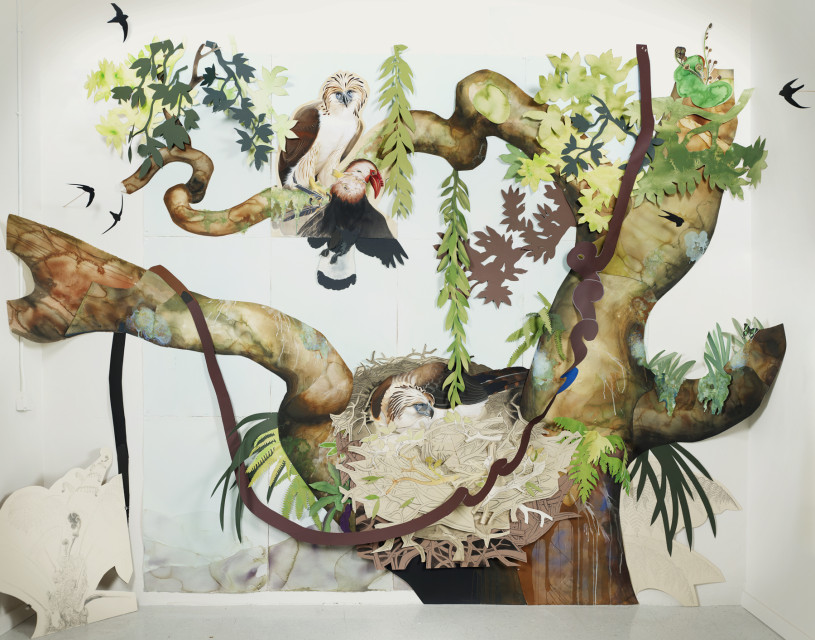
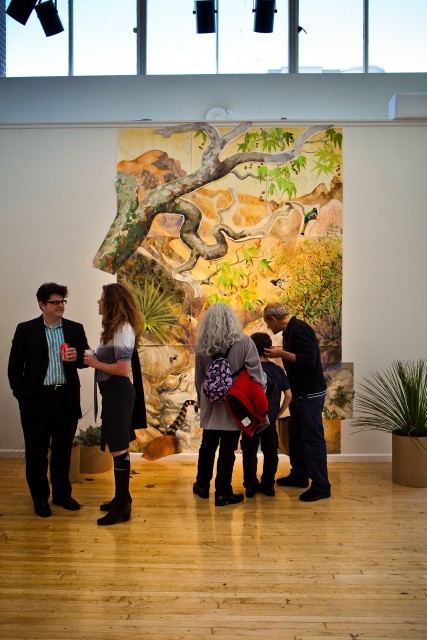
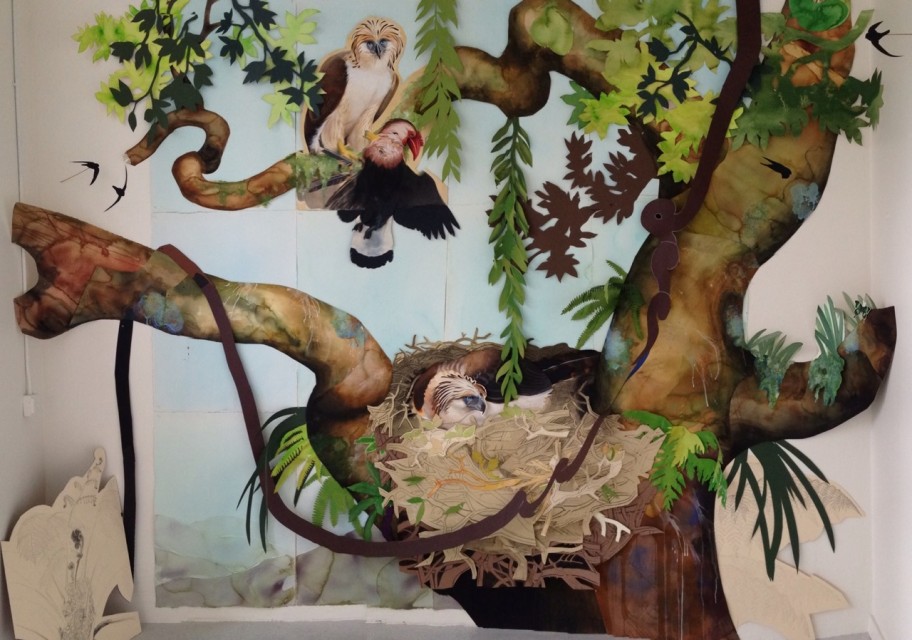
Philippine Eagle Installation
âI have one of the luckiest jobs in the world,â Tomb explains, âI get to channel my love for art and for travel into my passion for bird conservation.â
In Telluride, we will soon have a chance to see Tombâs paintings firsthand. Heâs coming to town as a part of Mountainfilm this Memorial Day Weekend. You can check out his fantastic work in the East Room of the Ah Haa Gallery. He will also speak at the second coffee talk with Tim Laman and Edwin Scholes.
As a child, Tomb was fascinated by birds and grew up sketching raptors. He went on to study art at California State University Long Beach. For 20 years Tomb was a portrait artist, but in 2005 he decided to focus his art solely on his boyhood love of birds. Tombâs work has been featured all over the world and in major publications such as The New Yorker and Harperâs.
The Jeepney Foundation connects with local non-profits on conservation efforts. Once JPF has identified the bird theyâre going to focus on, Tomb travels to the region to paint the bird. After assembling a collection of work, Tomb holds exhibitions to raise money and awareness about that species.

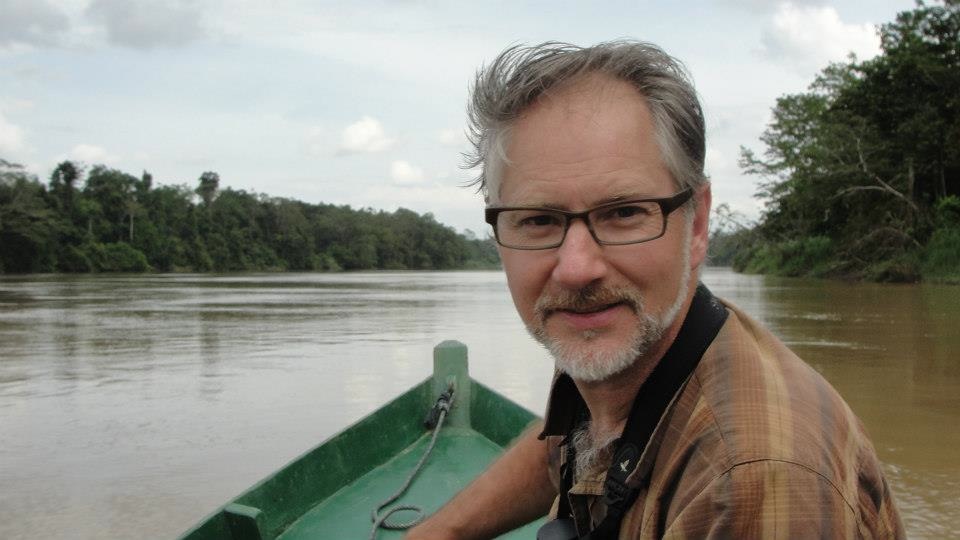
David Tomb in Borneo on the Kitabatagan River
The name âJeepneyâ came about from the WWII jeeps that Filipinos have converted into colorfully decorated taxis. As Tomb explains on his website, âThe Jeepney is a fitting symbol for us as they represent a quirky and authentic re-purposing of a utilitarian vehicle that has been transformed into an artful expression to thrive!â
Click here to learn more about the Jeepney Projects and more about Davidâs exciting adventure to Philippines to check out the âholy grail of birdsâ: the Philippine Eagle. âOf the 10,000 birds in the world,â said David Tomb, âitâs the most desired bird to see.â
Posted by Hungry Hyaena. Originally published here.

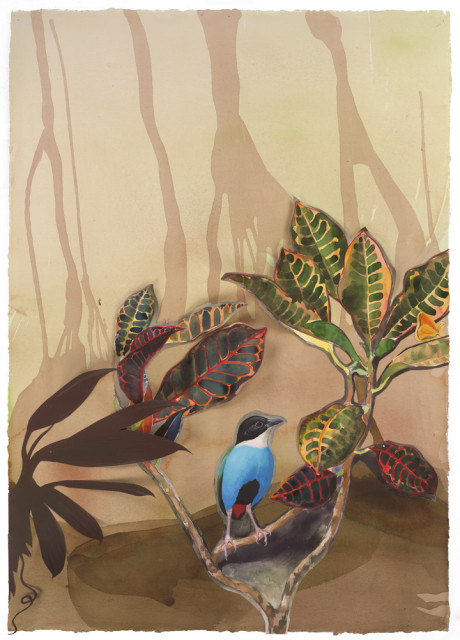
David Tomb
“Azure-breasted Pitta”
2012
Painted papers with mixed media and partially pasted and or completely pasted on paper with mixed media
42 x 30 inches
“Grand Birds of the Philippines,” David Tomb‘s current solo show at Electric Works, is deserving of a thoughtful review. Disappointingly, my writing time is limited this month and I can provide only a few observations.

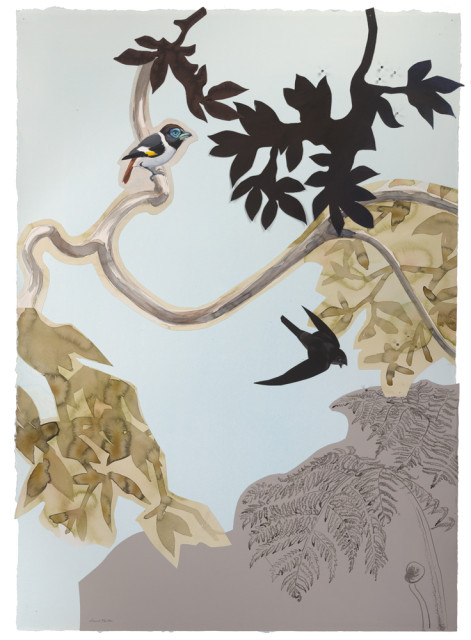
David Tomb
“Mindanao Wattled Broadbill and Swift”
2012
Painted papers with mixed media and partially pasted and or completely pasted on paper with mixed media
42 x 30 inches
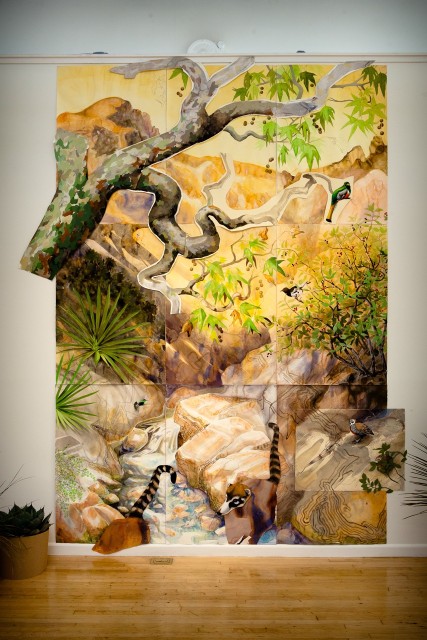
Birds have been the principal protagonists of David Tomb’s colorful watercolor and gouache paintings for the last six or seven years, but “Grand Birds of the Philippines” sees the artist pushing the construction of his works in exciting ways. Tomb builds the new pictures by pinning and pasting select fragments of various paintings and drawings onto larger paper grounds or directly onto the gallery walls. Viewers will spot numerous pin holes in the exhibited assemblages, evidence of earlier permutations; an orchid was moved to a different branch, perhaps, or a swift‘s dark silouhette adjusted so that it chases another gnat. Here and there, a vine or butterfly wing is left unfixed, protruding from the picture’s surface and lending a sculptural effect to the work.
Tomb’s approach, which calls to mind Judy Pfaff‘s “sculptural painting,” is a surprisingly effective technique for a wildlife artist (or, more accurately in the case of Tomb, a contemporary artist working at the fringe of that genre). The assemblages have a playful and provisional feel to them that is satisfyingly fresh, but the technique also heightens the sense of space and, in some of the works on display (most notably, the show’s pièce de rĂŠsistance, “Great Philippine Eagles“) supplies a verisimilitude normally lacking in natural history art and illustration. As in the field, our eyes dart around the impressive image, and the 3-dimensional elements cause the lenses of our predatory eyes to subtly flex and relax, bringing different subjects or areas into focus. Tomb smartly exaggerates this effect by painting soft watercolor wash backgrounds that fall suddenly away where they come up against a pinned down hard edge.

David Tomb
“Great Philippine Eagles”
2012
Painted papers with mixed media pinned to wall surface
130 x 180 inches
Of the smaller works in “Grand Birds,” “Azure-breasted Pitta” and “Mindanao Wattled Broadbill and Swift” are the most compositionally engaging and successful, but this writer, a birdand snake nut, also reserves a special place for Tomb’s exuberant “Mindanao Hornbill, Wagler’s Pit-Viper, andCollared Kingfisher.”
If David Tomb’s work appeals to you but, like me, you’re operating on a lean budget, you can support the artist’s conservation non-profit, Jeepney Projects, by purchasing benefit prints and, in a few weeks, note cards on the Jeepney website store. 100% of the print and card sales proceeds support bird conservation efforts in Mexico and thePhilippines.

David Tomb
“Mindanao Hornbill, Wagler’s Pit-Viper, and Collared Kingfisher”
2012
Painted papers with mixed media and partially pasted or completely pasted on paper with mixed media
42 x 30 inches
Image credits:Â copyright, David Tomb, 2012; courtesy David Tomb and Electric Works
(Excerpt originally published here on ArtBusiness.com).
Comment by AB: Lush mixed-media works on paper by David Tomb remind us that we’d better do what we can now to protect our endangered species before it’s too late. The particular birds spotlighted here are all native to the Philippines.

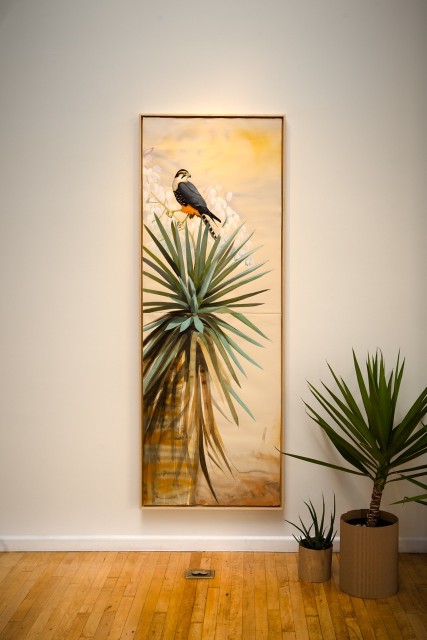
Endangered species art by David Tomb

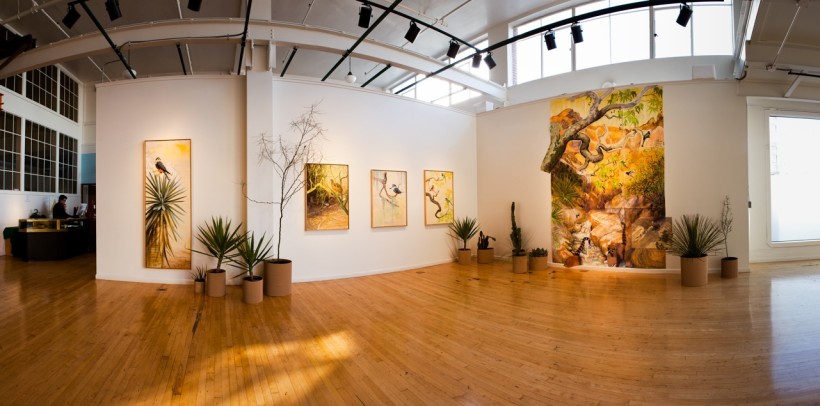
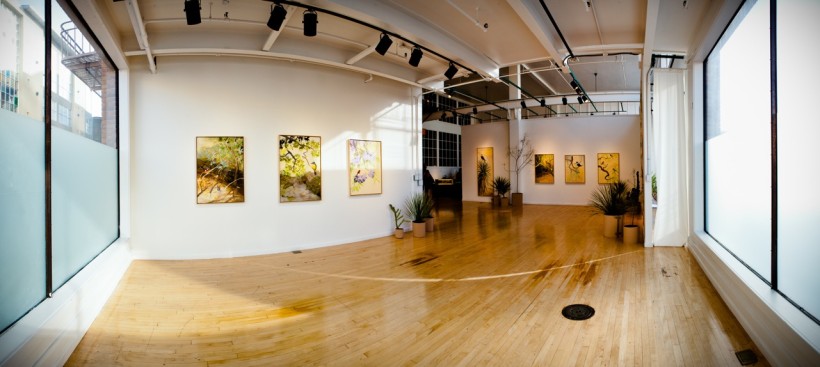
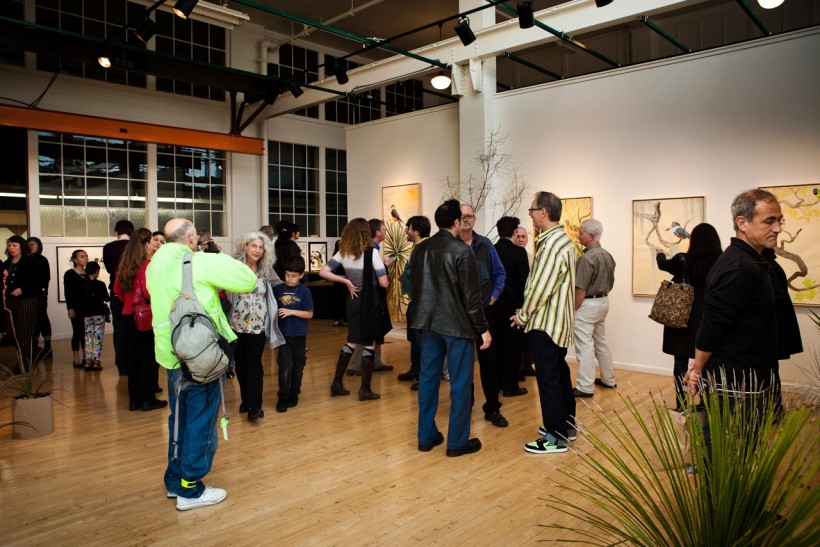
David Tomb art show at Electric Works Gallery.

Oversized mixed-media bird art by David Tomb in above image.

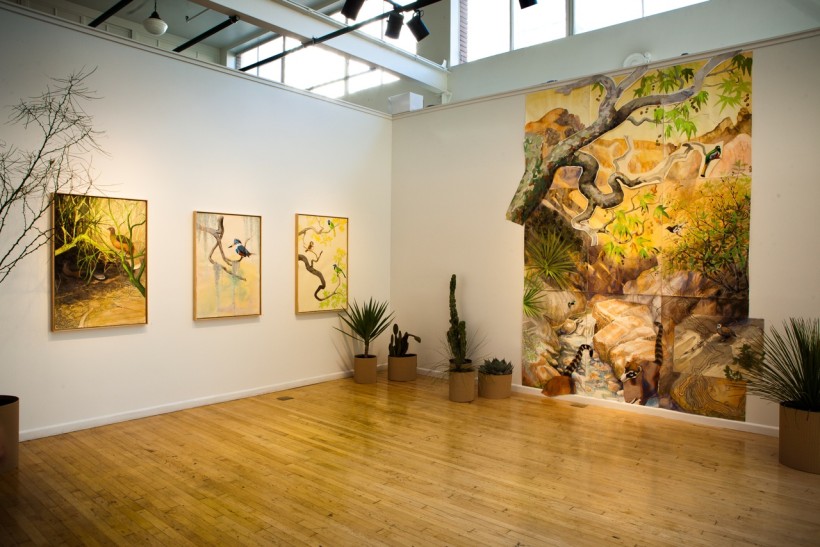
Endangered species art by David Tomb at Electric Works Gallery.

David Tomb art show presented with preservationist Jeepney Projects.
Electric Works is a gallery and print publisher. We exhibit contemporary art from nationally recognized artists and have an invitational printmaking program.